

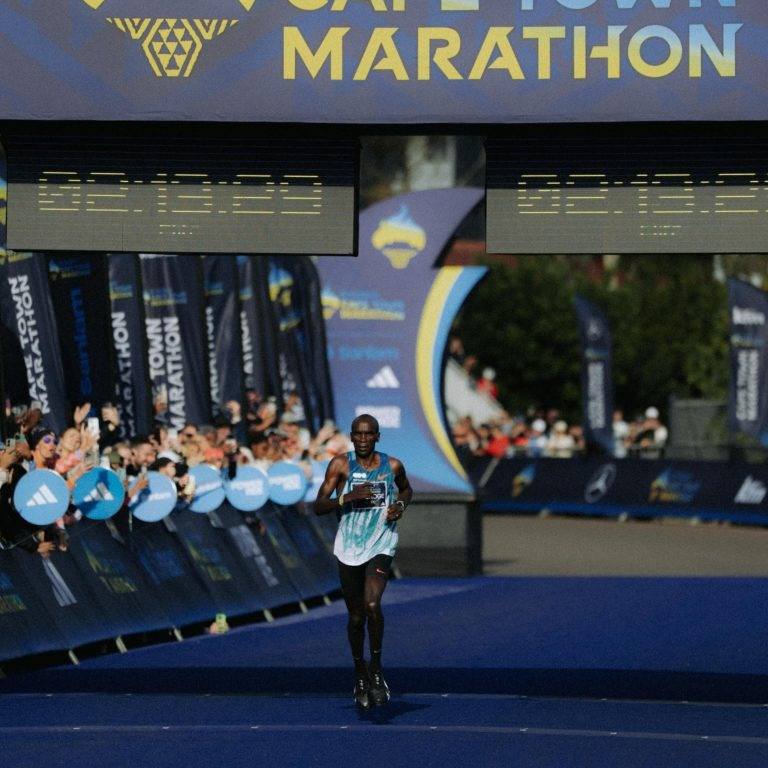
Kenya’s marathon great Eliud Kipchoge finished 16th at the Cape Town Marathon on Sunday, May 24, 2026, clocking 2:13:29 in a highly anticipated appearance. The race marked his first marathon in over six months and his first officially recognised marathon competed on African soil in a long time. The 41-year-old athlete entered the event carrying global attention due to his legendary status in distance running. Many expected a strong performance, but the result placed him outside the podium positions. Despite the finish, the race added another chapter to his long and influential career.
The Cape Town race represented more than just a competitive return for Kipchoge, it formed part of a broader global marathon campaign that began in Africa. This appearance carried symbolic weight because it connected his current professional journey back to the continent where his running career first began. Kipchoge has built a reputation as one of the most disciplined and consistent athletes in marathon history. His participation also aligned with growing efforts to elevate the Cape Town Marathon into the prestigious Abbott World Marathon Majors. The event continues to position itself as a world-class race attracting elite international competition. For Kipchoge, the return to African competition added emotional significance beyond rankings and times.
The race itself delivered strong competition at the front of the pack with Ethiopia’s Mohamed Esa claiming victory in a new course record time of 2:04:55. Kenya also featured on the podium through Kalipus Lomwai, who secured third place after a competitive run. Kipchoge crossed the finish line in 2:13:29, a time that reflected a challenging day against a fast elite field. Conditions and race dynamics pushed the leading pack to maintain a high pace from early stages. While Kipchoge did not challenge for the win, his presence influenced the attention and intensity surrounding the event.
Kipchoge’s result highlighted the competitive depth of modern marathon running, where emerging athletes continue to push record-breaking performances. His 16th place finish did not overshadow the significance of his participation in a major African race. Instead, it reinforced the reality that elite sport evolves quickly, even for legends. His return also demonstrated how experienced athletes manage performance, longevity, and selective racing schedules. The marathon in Cape Town served as a reminder of how endurance sport blends competition with legacy building.
Beyond the result, Kipchoge described the moment as meaningful, emphasizing that Africa remains central to his identity as an athlete. His career has inspired generations of runners across the continent and beyond through discipline and consistency. The Cape Town Marathon appearance added symbolic value to his ongoing journey as he continues to compete on global stages. Even without a podium finish, his presence elevated the event’s visibility and prestige. The race ultimately reflected both the strength of the current elite field and the enduring influence of one of marathon running’s greatest figures.