

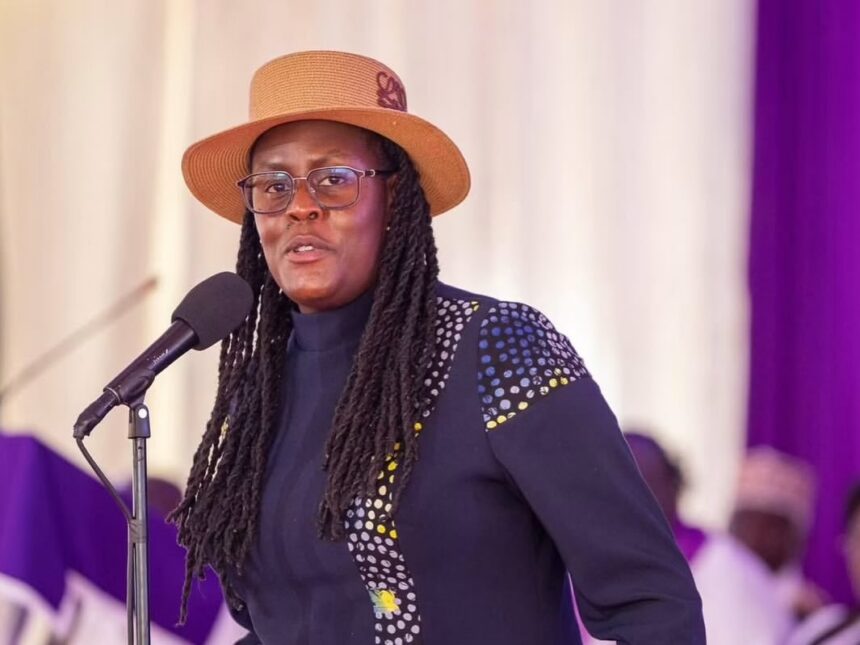
Winnie Odinga captured attention with an elegant and distinctive outfit during the official handover ceremony of her late father Raila Amolo Odinga’s mausoleum in Bondo, Siaya County, on Wednesday, October 7, 2026. The outfit combined modern African fashion with a refined, understated style that suited the significance of the occasion. Nairobi-based fashion label Ellen Design, founded by Hellen A. Tolbert, created the ensemble for the event, which marked an important moment for the Odinga family and the wider Kenyan public. The designer later described the experience as a full-circle moment, expressing gratitude for the opportunity to dress Winnie for such a historic occasion. Beyond the fashion statement, the appearance reflected the personal and public significance of a ceremony dedicated to preserving the legacy of one of Kenya’s most influential political figures.
Winnie wore a slim, straight-cut dark outfit featuring a high turtleneck collar and long sleeves. The design stood out through colourful geometric panels covered in closely spaced dots, which added texture and visual interest to the otherwise dark garment. The patterned sections featured shades of white, yellow and blue, creating a subtle contrast that made the outfit distinctive without appearing overly elaborate. Matching patterned cuffs completed the sleeves and gave the ensemble a consistent finish. The tailored silhouette provided a clean, structured appearance, while the colourful details introduced an artistic touch that reflected the designer’s attention to fabric and pattern.
Winnie completed the outfit with a wide-brimmed tan fedora featuring a dark emblem. The hat added character to the ensemble and complemented the darker tones of the main garment. Clear-framed glasses gave the look a contemporary finish, while subtle hoop earrings provided a simple accessory without competing with the outfit’s patterned details. Each element contributed to a coordinated appearance that balanced individuality with the formal nature of the ceremony. The overall styling demonstrated how carefully selected accessories can strengthen an outfit while allowing its central design features to remain prominent.
The ensemble was created by Ellen Design, a Nairobi-based fashion label founded by Hellen A. Tolbert. Connie Aluoch, who styled Winnie through the brand, helped bring the look together for the mausoleum handover. The combination of a structured silhouette, geometric fabric panels and carefully chosen accessories gave the outfit a recognisable identity. Rather than relying on excessive decoration, the design used colour, texture and proportion to create visual impact. The result placed Kenyan fashion talent at the centre of a significant national event, showing how local designers can contribute to occasions that carry cultural, historical and personal meaning.
After the ceremony, Ellen Design shared a message reflecting on the significance of dressing Winnie for the occasion. Tolbert described the experience as a full-circle moment for herself and her brand, explaining that it was an honour to contribute to the handover of the mausoleum where Raila Odinga was laid to rest. She also expressed her lifelong respect and affection for the late former prime minister. In her message, the designer explained that seeing Winnie reminded her of her father, making the opportunity especially meaningful. The statement revealed that the commission was about more than creating a fashionable outfit, as it also represented a personal connection to a leader whose public life had left a lasting impression on many Kenyans.
The designer’s message received warm reactions from social media users, many of whom praised the outfit and the significance of the occasion. Winnie herself liked the Instagram post, adding a personal touch to the exchange between the public figure and the designer. The positive response highlighted the growing visibility of Kenyan fashion labels and the role social media plays in showcasing their work. For independent designers, dressing prominent personalities at major events can introduce their creations to wider audiences and strengthen recognition of their craft. In this case, the attention also came from the historical importance of the ceremony, giving the outfit a meaning that extended beyond its appearance.
The mausoleum handover took place at Kang’o ka Jaramogi in Bondo, Siaya County, a site closely associated with the Odinga family and Raila’s legacy. President William Ruto presided over the ceremony and unveiled a commemorative plaque alongside Raila’s widow, Mama Ida Odinga. The event formally marked the transition of the site into a public heritage centre to be managed by the National Museums of Kenya. The handover was significant because it established a framework for preserving the site and making its historical importance accessible to the public. For the family, the ceremony also provided an opportunity to honour Raila’s memory while recognising the role he played in Kenya’s political development.
Raila Odinga’s legacy extends across decades of political activism, public service and democratic reform. As a former prime minister and a central figure in Kenya’s political history, he influenced national debates on governance, constitutional change and multiparty democracy. His political journey included periods of opposition, imprisonment and participation in government, making his life an important part of the country’s modern history. The establishment of a public heritage centre at his mausoleum creates an opportunity for future generations to learn about his contributions and the events that shaped his career. The handover therefore carried significance beyond the immediate family, connecting personal remembrance with the wider responsibility of preserving Kenya’s political and cultural history.
Winnie’s appearance also reflected her position as Raila’s daughter and a public figure in her own right. Her outfit attracted attention because it combined a personal moment of remembrance with a carefully considered fashion choice. At an event where the main focus was preserving her father’s legacy, the ensemble offered a distinctive but restrained expression of style. Ellen Design’s involvement demonstrated the contribution that local creative professionals can make to important public occasions. It also showed how clothing can become part of the visual record of an event, helping define how people remember a particular moment.
The ceremony brought together questions of heritage, family remembrance and Kenyan identity, while Winnie’s outfit added a notable fashion element to the day. Ellen Design’s work received attention not only for its craftsmanship but also for the personal meaning attached to the commission. Tolbert’s reflection made clear that the opportunity represented an honour rooted in her respect for Raila and her appreciation of being part of a historic occasion. Meanwhile, the handover established the mausoleum as a public heritage site intended to preserve his memory for future generations. Winnie Odinga’s appearance in the Ellen Design ensemble therefore became part of a wider story about honouring a national figure, recognising Kenyan creative talent and ensuring that important moments in the country’s history remain meaningful long after the ceremony ends.