

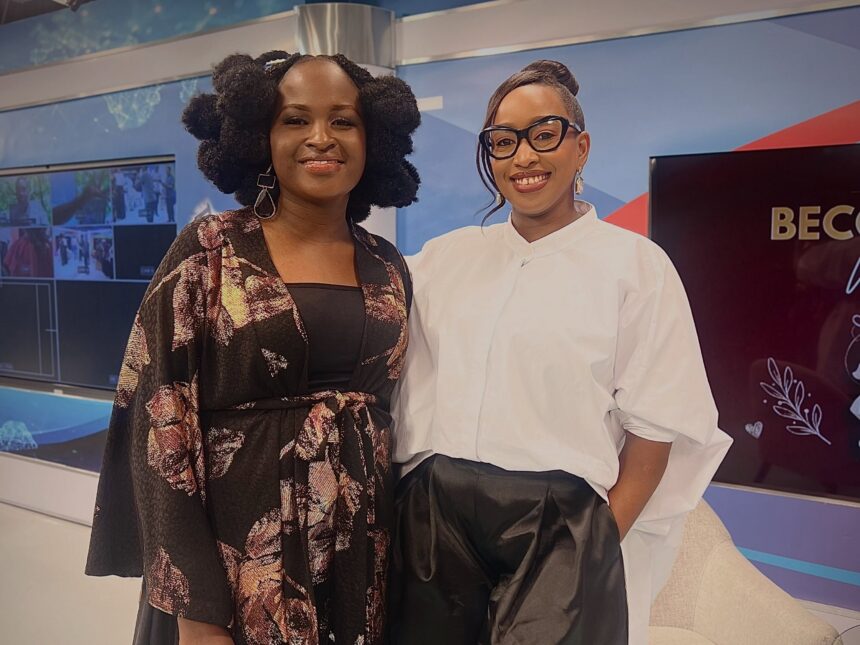
Kenyan media personality Janet Mbugua and gospel singer Mercy Masika have finally come face to face following their public disagreement over Masika’s Becoming a Wife masterclass. The two women sparked widespread debate on social media after Mbugua questioned the programme’s focus on preparing women for marriage without providing similar guidance for men. Their differing views attracted reactions from several Kenyan celebrities and public figures, turning the discussion into one of the most talked-about online conversations. However, their latest joint social media post suggests they have taken a step towards addressing their differences. The pair shared a photograph showing them seated together on what appeared to be a television studio set, revealing that they had met for a conversation about the issues that divided public opinion.
In their joint Instagram post, Janet and Mercy confirmed that they had sat on the same set and discussed their disagreement. Although they did not disclose where the conversation was recorded, the photograph suggested that it could be part of a television interview or recorded discussion. The two also left their followers wondering whether the conversation would eventually be aired for the public. Their caption focused on the importance of marriage ministry and ensuring that families receive the support they need. They wrote that marriage ministry was not a new concept, but emphasised that making sure every marriage it reaches is safe and supported should now be a priority.
The two women also appeared to acknowledge that people can share similar goals without agreeing on every issue. Their message highlighted the importance of creating families that feel recognised, protected and supported within church communities. This was particularly significant given the heated nature of their earlier disagreement. Rather than allowing their differences to define the entire conversation, their meeting appeared to create an opportunity to discuss the broader issues surrounding marriage, faith and family life. Their decision to share the photograph publicly also attracted fresh attention from followers who had been waiting to see how the disagreement would develop.
The controversy began after Mercy Masika announced a seven-session programme titled Becoming a Wife. The masterclass was scheduled to run from November 21 to December 12, with Lady Bishop Kathy Kiuna listed among the guest speakers. The programme was designed to provide women with guidance on marriage and preparing for family life from a Christian perspective. However, the announcement attracted criticism from people who questioned why similar attention was not being given to men preparing for marriage. Janet Mbugua was among those who raised concerns about the programme’s approach and the wider responsibilities of religious institutions when discussing relationships.
Janet questioned why a masterclass focused on becoming a wife did not have an equivalent programme addressing what it means to become a husband. Her argument centred on the belief that marriage involves two people who share responsibilities and should therefore receive guidance together. She also connected the discussion to wider social concerns, including femicide, gender-based violence and sexual abuse. According to her position, religious platforms should not only teach women how to prepare for marriage but also address the injustices and harmful behaviours that affect families and relationships. Her comments opened a broader conversation about the role of churches and religious leaders in promoting healthy marriages and protecting vulnerable people.
The discussion quickly attracted reactions from several prominent Kenyan personalities. Actress Kate Actress joined the conversation, pointing out that marriage involves two individuals rather than women alone. Her contribution reflected concerns about the need for balanced conversations that address the expectations placed on both husbands and wives. YouTuber Raych Gitau-Kaymo also questioned why there was no corresponding programme designed to help men become better husbands. These reactions helped push the debate beyond the original masterclass announcement and into a wider discussion about equality, accountability and preparation for marriage.
DJ Xclusive also joined the online conversation, taking a more humorous approach by announcing his own husbands’ masterclass. His response attracted attention because it highlighted the central question raised by critics in a light-hearted manner. Meanwhile, digital creators Lillian Ng’ang’a and Lynn Ngugi defended Mercy Masika’s decision to organise the programme. They argued that women should have the freedom to seek marriage guidance without being mocked or criticised for their interest in traditional relationship roles. Their position introduced another important perspective, with supporters arguing that a programme for women does not automatically mean that similar opportunities for men should be discouraged.
Mercy Masika maintained her position throughout the controversy, explaining that Becoming a Wife was focused on building families and promoting a Kingdom mindset. She defended the idea of preparing women for marriage through faith-based teaching and personal development. The gospel singer also addressed discussions about humility, describing it as strength under control rather than silence or the loss of one’s identity. Her explanation challenged the interpretation that Christian teachings about being a wife should encourage women to tolerate mistreatment or abandon their personal values. For Masika, the programme was intended to encourage women to approach marriage with understanding, purpose and a strong foundation in faith.
The disagreement exposed different opinions about how marriage should be discussed within religious communities. Some people supported Janet’s argument that programmes addressing marriage should give equal attention to the responsibilities of men and women. Others agreed with Mercy that women should be allowed to access specialised guidance without every initiative being judged by whether an equivalent programme exists for men. Both positions raised important questions about how couples can build healthy relationships while respecting individual responsibilities. The debate also highlighted the need for religious teachings to address issues such as domestic violence, emotional abuse, mutual respect and shared decision-making. These subjects remain important in conversations about marriage because a successful family requires more than simply preparing one partner for their role.
Janet and Mercy’s decision to meet in person has therefore attracted considerable interest from Kenyans who followed their disagreement. Their joint photograph suggests that they were willing to engage in a direct conversation rather than allow social media reactions to become the final word on the matter. However, neither woman has indicated that they have changed her position on the issues that initially sparked the controversy. The contents of their recorded discussion also remain unknown, as they have not confirmed when or where it will be broadcast. Their caption nevertheless indicates that both recognise the importance of safe and supportive families, even if they approach marriage ministry from different perspectives.
The meeting between Janet Mbugua and Mercy Masika marks an important development in a debate that brought together celebrities, content creators and members of the public. Their disagreement over the Becoming a Wife masterclass raised questions about gender expectations, Christian marriage teachings and the responsibility of religious institutions to address social problems. While Janet emphasised the need for men and women to receive balanced relationship guidance, Mercy defended the value of providing women with specialised marriage preparation. Their face-to-face conversation offers an opportunity to move beyond online arguments and examine the issues more constructively. Whether or not they eventually agree on every point, their meeting has reinforced the importance of respectful dialogue, mutual understanding and creating families where both partners feel safe, valued and supported.