

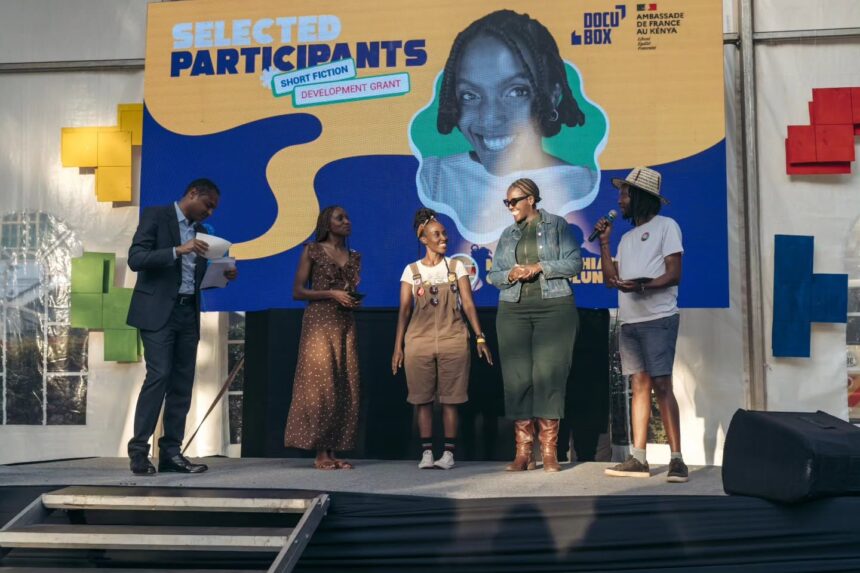
Docubox, the East African Documentary Film Fund, has selected five filmmakers from Tanzania, Kenya, Uganda and Rwanda for its 2026 Short Fiction Development Grant and Lab, a new initiative designed to strengthen short fiction filmmaking across the region. The programme will provide financial support, professional mentorship and international industry exposure to help independent filmmakers develop their stories and prepare their projects for production. Each selected filmmaker will receive €2,500, bringing the total development funding to €12,500. The initiative is being implemented in partnership with the French Embassy in Kenya, combining financial assistance with training and opportunities to connect with international film professionals. Through this programme, Docubox aims to address a major challenge facing independent filmmakers in East Africa, the limited funding and resources available during the early stages of film development.
The five selected filmmakers represent a range of East African creative voices and bring projects from four countries into the programme. Tanzania’s Joshua Faber will develop Bibi Titi – A Walk to Freedom, while Kenya is represented by Wanjeri Gakuru with Listen and Naddya Adhiambo Oluoch-Olunya with Uzi. Uganda’s Maria Byoma has been selected with Searching in Ssingo, and Rwanda’s Ganza Moise will work on Bituri. Their selection followed an open call that invited eligible filmmakers to submit projects for consideration. The programme provides a platform for these creatives to strengthen their screenplays, refine their storytelling and prepare their projects for potential production partnerships.
Docubox announced the selected participants on 18 October during Shorts, Shorts & Shots 2026: Animation Edition, an event held at its premises in Nairobi. The announcement marked an important step in the organisation’s efforts to support new short fiction projects and expand opportunities for East African filmmakers. Although the five projects come from different countries, they share a place within a regional programme intended to strengthen independent film development. The initiative also reflects growing efforts to create stronger professional connections between filmmakers across East Africa and the international film industry. By combining grants with structured mentorship, Docubox is seeking to support filmmakers beyond the initial selection process and help them prepare for the next stages of their projects.
The development grant comes at a stage of filmmaking that often receives less attention than production and distribution. Before a film reaches the camera, its creators need time and resources to build a compelling screenplay, develop believable characters and establish a clear narrative structure. Filmmakers may also need to research their subjects, revise early drafts and prepare documents that communicate their creative vision to producers and potential funders. These tasks can be difficult to complete without dedicated financial support, particularly for independent creatives working with limited resources. Docubox’s Short Fiction Development Grant and Lab seeks to address this gap by giving the selected filmmakers both funding and professional guidance during the writing and development process.
Susan Mbogo, Executive Director of Docubox, emphasised the importance of supporting films before they enter production. She explained that development remains one of the least funded stages of filmmaking, even though it plays a major role in determining the strength and direction of a finished project. Through the partnership with the French Embassy in Kenya, the organisation wants to help independent East African filmmakers shape authentic African stories and strengthen the regional film ecosystem. The €2,500 grant awarded to each participant is intended to provide practical support as they work on their projects. Combined with mentorship, the funding gives the selected filmmakers an opportunity to refine their ideas and prepare them for discussions with possible production partners and financiers.
The programme will run for three months of online mentorship, with a focus on screenwriting, story development and pitching. Kenyan filmmaker Wanuri Kahiu, known for directing Rafiki, will lead the screenwriting and story development component. Her involvement brings the participants guidance from a filmmaker with experience creating work that has attracted attention beyond Kenya. During the mentorship period, the participants will work on their scripts, character development and narrative structure. The aim is to help each filmmaker develop a clearer and stronger project that can be presented to industry professionals for further support.
South African producer Tiny Mungwe will lead the pitching mentorship component. Mungwe has experience in film development and industry programmes, including work associated with Durban FilmMart and Berlinale Talents. She has also served as a programme adviser for Africa at the Locarno Film Festival and is part of the artistic team for Locarno Open Doors, whose 2025 to 2028 focus is on Africa. Her role will help participants prepare to communicate their projects to producers, financiers and other industry decision-makers. Strong pitching skills can be important for independent filmmakers because a compelling idea must often be presented clearly before it attracts the resources needed for production.
As part of the lab, participants will develop materials that help explain the creative and practical direction of their films. These may include pitch decks, character bibles, mood boards and financing plans, alongside revised screenplays and other story development documents. A pitch deck can introduce a project’s central idea, visual approach and intended audience, while a character bible can provide greater detail about the people who drive the story. Mood boards help communicate the film’s proposed visual atmosphere, and financing plans outline how a project might secure the resources required for production. Together, these materials can make it easier for filmmakers to present their ideas to potential partners and demonstrate how their projects could move from development into production.
International exposure is another central part of the programme. Following the online mentorship, the selected filmmakers are expected to participate in Talent Connexion and other industry activities during the Clermont-Ferrand International Short Film Festival in France, scheduled for 28 January to 5 February 2027. The festival is an important gathering for the international short film community, providing opportunities for filmmakers and industry professionals to discover projects, exchange ideas and build professional relationships. Participation will give the East African delegation a chance to introduce its projects to people working in different parts of the film industry. Such connections can help independent filmmakers explore potential collaborations and learn more about the requirements of international film markets.
The partnership with the French Embassy in Kenya is central to creating these opportunities. France’s Ambassador to Kenya, H.E. Wadid Benaabou, highlighted the importance of giving African filmmakers opportunities to share stories from their own communities and perspectives. He stressed that international audiences should have access to a wider range of narratives, including those emerging from Nairobi, Kigali, Kampala and Dar es Salaam. He also noted that support for film industries involves more than financial assistance, pointing to the importance of access to international platforms and professional networks. His remarks reflect the programme’s broader aim of helping East African filmmakers reach audiences and industry partners beyond their home countries.
The initiative also plans to establish an East African Showcase that will bring the selected filmmakers together with potential co-producers, funders, distributors and other industry professionals. The showcase is intended to increase the visibility of short fiction projects from the region and create opportunities for conversations about financing, production and distribution. For independent filmmakers, these connections can be essential because completing a screenplay does not automatically guarantee that a film will secure production funding. Meeting potential partners can help creators understand what investors and producers are looking for while allowing them to explain the value and direction of their work. The showcase could also encourage collaboration between filmmakers from different East African countries, supporting a more connected regional industry.
Docubox has supported independent filmmakers in East Africa since its establishment in 2013. The organisation provides grants, development programmes, workshops and networking opportunities intended to help filmmakers strengthen their projects and careers. According to the organisation, it has supported more than 150 films through over US$1.5 million in production grants. Its work has contributed to creating opportunities for filmmakers who might otherwise struggle to access funding and professional development. The new Short Fiction Development Grant and Lab expands this support by focusing specifically on short fiction projects and the early creative decisions that shape their eventual production.
The selection of five filmmakers for the 2026 Docubox Short Fiction Development Grant and Lab represents an opportunity to strengthen short film development across Tanzania, Kenya, Uganda and Rwanda. Each participant will receive financial support, three months of mentorship and the chance to connect with international film professionals through activities linked to the Clermont-Ferrand International Short Film Festival. The programme also seeks to improve access to co-production opportunities and encourage greater collaboration across East Africa. Its impact will ultimately depend on how the projects progress through development and whether the filmmakers secure the partnerships needed to bring their stories to the screen. By investing in creative development and international access, Docubox and the French Embassy in Kenya are helping create more opportunities for East African filmmakers to develop their work and bring a wider range of African stories to audiences.