

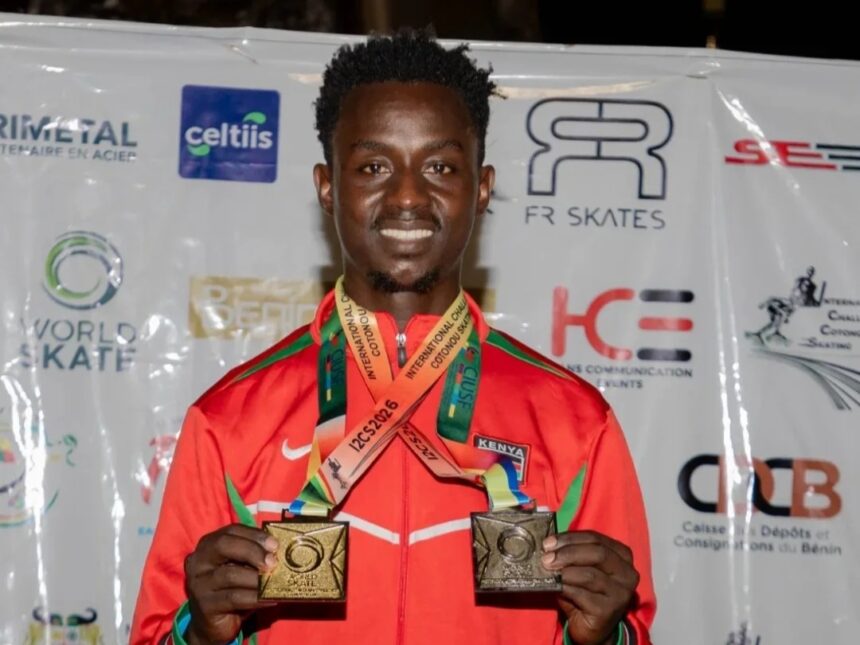
Eric Omondi has once again stepped into the spotlight for a cause that goes beyond entertainment, this time focusing on uplifting a young Kenyan athlete who has captured attention across the continent. The comedian and activist recently revealed that he is actively searching for Kevin Ruhiu, a talented skater who made headlines after winning a gold medal and an additional medal while representing Kenya alone in Benin. This remarkable achievement has sparked conversations about the challenges many African athletes face, especially those competing without adequate support systems. Eric Omondi’s move reflects a growing awareness around the need to recognize and invest in grassroots talent. His public appeal has already started drawing attention to Kevin Ruhiu’s story and the broader issues affecting emerging athletes.
Kevin Ruhiu’s success in Benin stands out not only because of the medals he secured but also because of the circumstances under which he competed. Reports indicate that he traveled and participated in the competition without a full team or significant institutional backing. This highlights a common reality for many athletes in developing sports disciplines, where funding, training facilities, and exposure remain limited. Despite these obstacles, Ruhiu managed to outperform competitors from countries with more established support systems. His determination and discipline have become a symbol of resilience, inspiring many young people who aspire to succeed in unconventional sports. His story shows that talent can thrive even in difficult conditions, but it also exposes the gaps that need urgent attention.
Eric Omondi’s interest in supporting Ruhiu is consistent with his recent efforts to champion social causes and support underprivileged individuals. Over the past few years, he has used his platform to raise funds, create awareness, and mobilize resources for various initiatives. His approach often combines visibility with direct action, ensuring that the people he highlights receive tangible help. In Ruhiu’s case, Omondi has expressed a desire to locate him and understand his needs before offering assistance. This could include financial support, training opportunities, or connecting him with sponsors who can help elevate his career. Such interventions can play a critical role in transforming individual success into sustained growth.
The attention generated by this story also raises important questions about how sports development is managed in Kenya and across Africa. Many athletes in niche sports struggle to access funding and recognition compared to those in mainstream disciplines like football or athletics. This imbalance limits the diversity of talent that can emerge on the global stage. When individuals like Kevin Ruhiu succeed despite these barriers, it exposes both their potential and the system’s shortcomings. Increased investment in sports infrastructure, talent identification, and athlete welfare could help bridge this gap. Public figures like Eric Omondi can act as catalysts by bringing these issues into the spotlight and encouraging broader participation from both private and public sectors.
As Eric Omondi continues his search for Kevin Ruhiu, the story serves as a reminder of the power of visibility and support in shaping athletic careers. A single act of recognition can open doors that were previously out of reach for many young talents. Ruhiu’s achievement in Benin has already positioned him as a promising figure in African skating, and the added support could accelerate his journey significantly. This moment also presents an opportunity for stakeholders to rethink how emerging sports are nurtured and promoted. If leveraged correctly, it could lead to long-term changes that benefit not just one athlete but an entire generation.