

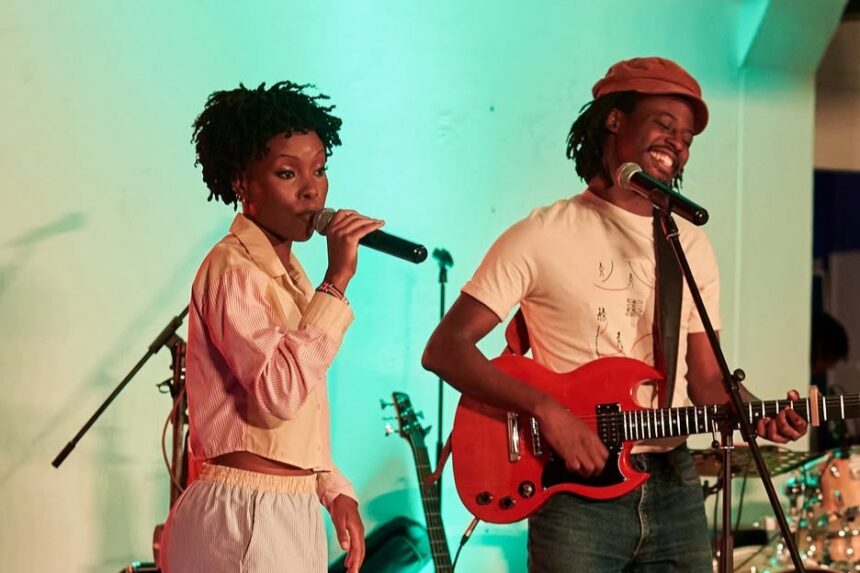
The Goethe-Institut Kenya brought together Ghanaian artist Tommy WÁ and Kenyan musician Labdi for a concert in Nairobi on 2 October as part of the MobiArts Tour. The regional project is designed to promote artistic exchange and mobility across Africa by connecting performers from different countries with new audiences and creative communities. The Nairobi concert provided a platform for the two artists to present their distinct approaches to music while highlighting the value of cross-border collaboration within the continent. MobiArts also challenges the idea that African artists must look primarily to Europe for meaningful international opportunities. Instead, the project encourages artists to build sustainable careers by travelling, performing and creating connections across African markets.
MobiArts brings together artists working in a range of creative disciplines, making it broader than a conventional music tour. Its participating artists include musicians, storytellers, stand-up comedians, dancers, slam poets and theatre practitioners. By placing artists from different countries and disciplines in the same touring programme, the project creates opportunities for audiences to encounter creative forms they may not normally experience. The format also allows participating artists to exchange ideas and learn from different cultural and artistic environments. For African performers seeking wider audiences, such mobility can create connections that extend beyond a single concert or country.
The project has a strong focus on artistic mobility within Africa and seeks to change how international success is viewed by emerging and established creatives. African artists have often faced limited opportunities to tour outside their home countries, even when their work has strong cultural and artistic value. MobiArts provides a framework for artists to move between African countries and develop relationships with audiences on the continent. This approach recognizes that African creative industries contain diverse markets, languages, traditions and audiences that can offer meaningful career opportunities. The project therefore places regional exchange at the centre of its vision for the growth of African arts and culture.
Labdi’s participation in the Nairobi concert brought attention to indigenous Kenyan music and instruments, particularly the orutu. The Luo string instrument has become an important part of her artistic practice and has encouraged her to explore the musical traditions and cultural history associated with it. Her work draws on Luo musical traditions, oral histories and archival material as she seeks to preserve and reinterpret indigenous music for contemporary audiences. The orutu has historically been associated with men, making Labdi’s engagement with the instrument part of a broader exploration of cultural practice and artistic expression. Through her work, traditional musical elements can reach audiences in new settings while remaining connected to their cultural roots.
Labdi’s approach also reflects one of the broader objectives of MobiArts, which is to expose audiences to musical styles and instruments that receive less attention in mainstream African pop music. Contemporary African music has developed a large international audience, but many indigenous instruments and traditional forms remain less visible within popular music spaces. Performances that place such instruments at the centre of contemporary artistic work can introduce audiences to cultural traditions they may not otherwise encounter. Labdi’s use of the orutu provides an example of how an indigenous instrument can become part of a modern performance practice. Her participation in the Nairobi concert therefore added a strong Kenyan cultural dimension to the regional exchange.
Tommy WÁ brought a different artistic perspective to the MobiArts concert. The Ghanaian poet, visual storyteller and singer-songwriter is based in Accra and works across several creative forms. His music incorporates Afro-inspired sounds with contemporary folk, indie and retro-soul influences, reflecting a range of musical interests. His work is shaped in part by Accra’s contemporary cultural environment and the different influences that exist within the city’s creative scene. Bringing Tommy WÁ to Nairobi created an opportunity for Kenyan audiences to experience a Ghanaian artist whose work combines music with poetry and visual storytelling.
The meeting between Tommy WÁ and Labdi also illustrates the kind of artistic contrast that the MobiArts Tour is designed to create. Their backgrounds and approaches are different, with Tommy WÁ drawing from contemporary Ghanaian and international musical influences while Labdi’s practice has a strong connection to Luo musical traditions and the orutu. Putting these perspectives in the same programme allows audiences to experience different approaches to African music without treating the continent’s creative identity as a single style. It also gives artists an opportunity to encounter ideas and practices from outside their usual markets. Such exchanges can contribute to a broader understanding of the diversity within African contemporary culture.
The MobiArts Tour extends beyond Kenya and Ghana, with artists from Rwanda and Côte d’Ivoire also participating in the programme. The touring format takes artists across four African countries and creates a network that connects creative communities in different parts of the continent. Rather than limiting cultural exchange to individual performances, the programme uses travel as a way of creating sustained contact between artists and audiences. Each stop offers an opportunity for participating creatives to share their work while learning about the cultural environment in another country. This regional structure gives MobiArts a wider purpose than a single concert series.
The Goethe-Institut has said the touring format is intended to strengthen relationships between artists and audiences while encouraging cultural exchange among participating countries. The Nairobi event reflects that objective by bringing a Ghanaian artist and a Kenyan musician together in the same performance programme. Such events can give audiences a direct connection to artistic practices from other parts of Africa while giving performers an opportunity to reach people outside their established markets. The emphasis on mobility also recognizes that creative careers can develop through relationships, touring opportunities and exposure to new communities. MobiArts places those elements at the centre of its regional cultural programme.
The Goethe-Institut Kenya plays a wider role in cultural and educational exchange beyond the MobiArts Tour. The Goethe-Institut is Germany’s international cultural institute and operates in countries around the world, with its Nairobi office working with Kenyan partners on a range of cultural and educational initiatives. These activities include artistic projects, training programmes, co-productions, school collaborations, information initiatives and German-language teaching. Its involvement in projects such as MobiArts connects its broader cultural exchange work with opportunities for African artists to collaborate and reach new audiences. The Nairobi office therefore provides a platform through which local and international cultural initiatives can intersect.
The 2 October MobiArts concert in Nairobi demonstrated how regional artistic exchange can bring together different musical traditions, creative disciplines and cultural experiences. Tommy WÁ represented Ghana’s contemporary creative scene through his work as a poet, visual storyteller and singer-songwriter, while Labdi brought a Kenyan perspective rooted in Luo musical traditions and her work with the orutu. Their participation showed how artists from different backgrounds can share a stage while maintaining distinct identities and artistic approaches. With Kenya, Ghana, Rwanda and Côte d’Ivoire connected through the wider tour, MobiArts offers a model of cultural mobility focused on opportunities within Africa. The project ultimately puts African audiences and artists at the centre of artistic exchange, creating space for new connections, wider exposure and greater recognition of the continent’s diverse creative traditions.