

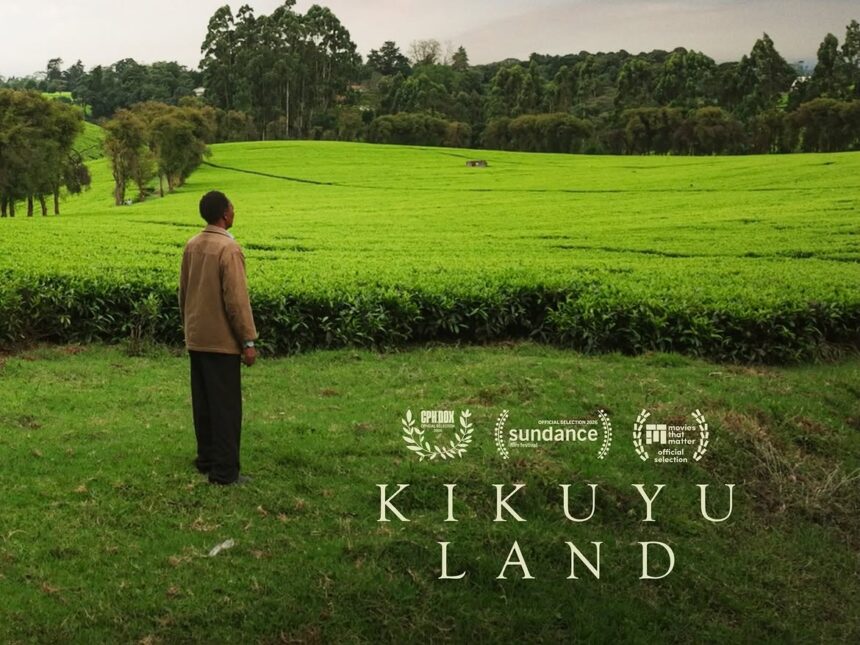
Kenyan documentary Kikuyu Land is set to make its Kenyan premiere at the NBO Film Festival, giving local audiences an opportunity to engage with a deeply personal story rooted in the country’s complicated history of land ownership. Directed by Bea Wangondu and Andrew H. Brown, the documentary follows Wangondu as she investigates a land dispute involving local government and a powerful multinational corporation. What begins as an investigation into a contested piece of land gradually develops into a much more personal journey. As Wangondu digs deeper, she uncovers buried wounds and family secrets that connect the dispute to her own history. The film therefore combines questions about land and power with an intimate exploration of memory, identity and family.
Kikuyu Land first gained international attention after premiering at the Sundance Film Festival, one of the major platforms for independent cinema and documentary filmmaking. Its appearance at Sundance placed the Kenyan story before an international audience and created a path for the film to reach viewers beyond East Africa. The documentary’s focus on land gives it particular relevance in Kenya, where questions surrounding ownership, displacement, inheritance and access to land have remained important parts of the country’s social history. Rather than presenting the issue only through a broad political or historical lens, the film approaches it through Wangondu’s personal investigation. This allows the documentary to connect a wider dispute with the experiences and secrets within one family.
At the centre of the film is Wangondu’s investigation into a land dispute involving local authorities and a powerful multinational corporation. The dispute becomes the starting point for a search that takes her beyond the publicly visible aspects of the conflict. As she investigates, she encounters stories and information that reveal wounds that have remained hidden within her family. The discovery of these secrets changes the nature of her investigation and forces her to examine her own relationship with the history she is uncovering. Kikuyu Land consequently becomes both an investigation into a land dispute and a personal examination of the consequences that unresolved history can have on families.
The title Kikuyu Land also places the documentary within a specific Kenyan historical and cultural context. Land has played a central role in the history of communities across Kenya, particularly in relation to colonialism, displacement and the struggle for ownership and recognition. The subject remains relevant because land disputes can involve much more than property boundaries or legal documents. They can carry memories of previous generations, questions of belonging and disagreements over who has the right to occupy or control particular spaces. By connecting these broader questions to Wangondu’s own family story, the documentary gives audiences a personal entry point into an issue with wider significance.
The film’s Kenyan premiere will take place in competition at the NBO Film Festival, which runs from 15 to 25 October. Its inclusion in the festival gives Kenyan audiences an opportunity to watch a locally connected documentary that has already reached an international film platform. The competition setting also places Kikuyu Land alongside other films selected for the festival programme. For audiences familiar with Kenya’s land history, the documentary could provide an opportunity to consider those issues through a different perspective. For younger viewers who may know the history mainly through textbooks or public debate, Wangondu’s personal investigation offers another way of approaching the subject.
Kikuyu Land will also reach audiences in the United Kingdom and Ireland, with select theatrical screenings beginning on 2 October. The international theatrical release extends the documentary’s reach beyond festival audiences and gives viewers in those markets an opportunity to engage with a Kenyan story through documentary filmmaking. This is particularly significant for audiences in the Kenyan diaspora, who may have a personal or family connection to questions surrounding land and displacement. The film’s international journey also demonstrates how stories rooted in specific communities can find relevance with audiences in different countries. Its movement from Sundance to Kenyan and international screenings gives the documentary a broader platform for its themes.
The production team behind Kikuyu Land includes several filmmakers with experience in documentary storytelling. The film is produced by Oscar nominee Moses Bwayo alongside Bea Wangondu, Andrew H. Brown, Mike Morrisroe and Joseph Njenga. Bwayo’s involvement adds another notable name to the production, while Wangondu’s role as both director and subject of the investigation gives the project a particularly personal dimension. Brown shares directing duties with Wangondu, helping shape the story as it moves between the land dispute and the discoveries within her family. The combination of the production and directing team has resulted in a documentary that connects investigative filmmaking with personal storytelling.
Wangondu’s position at the centre of the documentary is important because her investigation is not detached from the events she is exploring. Her search for answers leads her into parts of her family’s past that had not been fully confronted. This creates tension between the desire to understand what happened and the emotional consequences of uncovering information that has remained buried. The documentary therefore examines not only what can be discovered through investigation but also what happens when people are forced to confront difficult memories. That personal dimension gives Kikuyu Land an emotional layer alongside its focus on land and institutional power.
The involvement of a multinational corporation and local government in the dispute also introduces questions about power and competing interests. Land conflicts can involve individuals, communities, government institutions and private companies, with each party bringing different interests and forms of influence to the dispute. Kikuyu Land uses Wangondu’s investigation to explore those dynamics while maintaining the family story at the centre of the narrative. The documentary does not simply focus on the existence of a dispute, but follows the investigation as it reveals connections between public events and private history. This approach gives the film room to explore how large disputes can affect individual families across generations.
For Kenyan audiences, the film’s arrival at the NBO Film Festival is likely to be significant because it brings a Sundance-premiered Kenyan documentary back to its home audience. International recognition can help draw attention to local stories, but the Kenyan premiere allows the people most familiar with the country’s land history to engage directly with the film. The screening also creates space for conversations about the themes raised by Wangondu’s investigation, including family history, land ownership and unresolved wounds. Its competition screening places it within a broader programme of cinema while retaining its connection to Kenyan audiences. The festival run from 15 to 25 October will therefore mark an important stage in the documentary’s journey.
Kikuyu Land brings together personal discovery and a wider examination of land, power and history. Through Bea Wangondu’s investigation, the documentary moves from a dispute involving local government and a multinational corporation into the buried experiences of her own family. Its Sundance premiere has already introduced the story to an international audience, while the upcoming Kenyan premiere at the NBO Film Festival will give local viewers the chance to experience it on home soil. The film will also screen in select theatres across the UK and Ireland from 2 October, extending its reach further. With Wangondu and Andrew H. Brown directing and an experienced production team including Oscar nominee Moses Bwayo, Kikuyu Land presents a personal Kenyan story with themes that extend well beyond the dispute at its centre.