

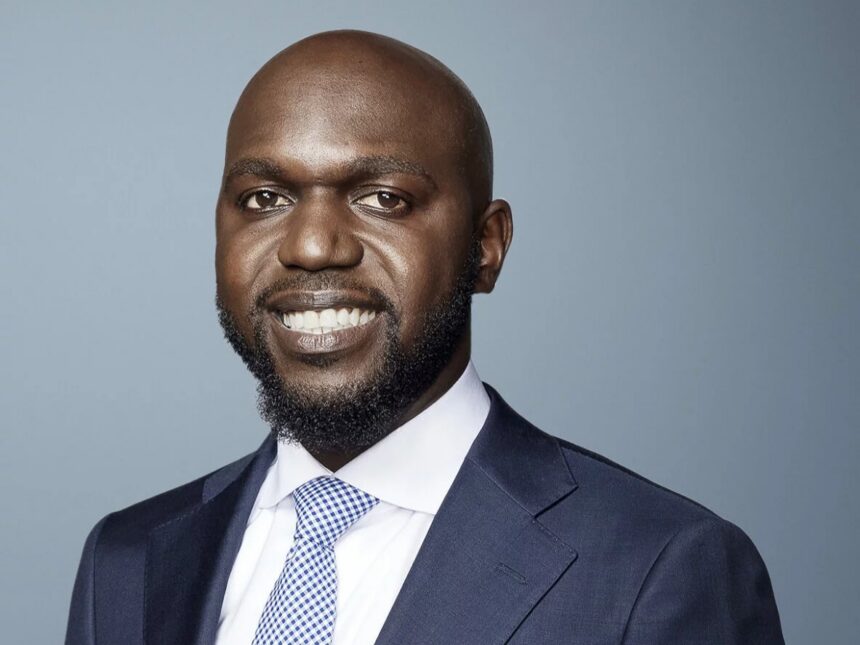
CNN journalist Larry Madowo has responded sharply to a social media user who claimed he had lost public respect following his attendance at Charlene Ruto’s koito. Madowo has faced sustained online criticism since appearing at the traditional ceremony involving President William Ruto’s daughter, with some Kenyans questioning whether his attendance conflicted with his reputation as a journalist known for scrutinising political power. The latest exchange showed that Madowo has no intention of allowing social media criticism to dictate how he handles his personal relationships. After a user told him that he had lost their respect, the journalist delivered a brief but blunt response. His reaction has once again placed the debate around his attendance at the event and the boundaries between a journalist’s professional responsibilities and private relationships in the spotlight.
The latest exchange followed another sarcastic interaction involving Madowo and a Kenyan social media user. On September 1, Madowo posted a message in Swahili on X suggesting that he was considering calling someone to ask for a favour. The post came after another user had shared an image of a Kenyan government aircraft while jokingly asking whether Madowo could ask his friend to lend it to him for a day. Madowo’s response appeared playful and sarcastic, but it quickly attracted attention because of the broader controversy surrounding his attendance at Charlene Ruto’s koito. His online activity continues to generate significant engagement, particularly when his posts touch on politics, prominent personalities or issues involving the Kenyan government.
The situation escalated when another social media user, identified as @FlyingeagleKe, responded to a separate sarcastic post by telling Madowo, “You lost our respect.” Rather than offering a detailed defence or explaining his position again, Madowo responded directly and dismissed the criticism. “I’m going to hold your hand when I tell you this: I don’t care,” he wrote. The short response made it clear that he was not interested in debating whether the critic or the wider public approved of his personal decision to attend the ceremony. Madowo’s blunt reply subsequently became another talking point in the ongoing discussion about his relationship with his audience and the scrutiny he faces as a high-profile journalist.
The controversy surrounding Madowo began after he attended Charlene Ruto’s koito, an event that attracted considerable public attention because of the political prominence of her family. For some Kenyans, seeing Madowo at the ceremony was difficult to reconcile with his public image as a journalist who has covered political developments and government actions critically. His reporting and commentary have earned him a large following, particularly among Kenyans who closely follow political affairs and public accountability issues. His appearance at a private family celebration therefore triggered questions about whether personal relationships could affect how the public perceives his professional independence. The criticism demonstrates the intense level of scrutiny that journalists can face when their private lives intersect with prominent political figures.
Madowo has previously explained why he attended the ceremony and maintained that his presence should not be interpreted as political support. According to his explanation, he attended to support Isaya Yunge, whom he described as a longtime personal friend. Madowo has emphasised that his relationship with the groom was the reason for his attendance rather than any desire to associate himself with the political establishment. From his perspective, attending a friend’s important family occasion does not automatically mean endorsing the political views or actions of every person connected to the event. That distinction, however, has not convinced everyone who has followed his work and views his public image through the lens of his journalism.
The disagreement reflects a wider challenge faced by journalists who maintain personal relationships with people connected to politics and public institutions. Journalists often have professional obligations that require them to question politicians, investigate government decisions and report on issues that affect the public. At the same time, journalists remain private individuals who have friendships and family relationships outside their professional duties. The public may nevertheless expect journalists who cover politics to maintain a level of distance from political figures and their families. Madowo’s situation shows how difficult it can be to separate those two aspects of a public figure’s life when a private event becomes a subject of widespread public discussion.
Some Kenyan social media users have argued that Madowo’s appearance at the koito undermined the credibility associated with his journalism. Others have taken a more nuanced position, arguing that attending a private ceremony for a friend does not prevent a journalist from doing his job professionally. The debate has consequently moved beyond Madowo himself and into questions about journalistic ethics, personal friendships and perceptions of independence. For critics, the issue is about appearances and whether close social associations can create doubts about impartiality. For supporters, the criticism represents an unrealistic expectation that journalists should abandon ordinary personal relationships simply because someone connected to those relationships holds political power.
The backlash has reportedly become strong enough for some social media users to suggest that Madowo should be excluded from future events associated with activists or political movements. Others have called for people to distance themselves from him or suggested that he should be cancelled because of his attendance at the ceremony. Such reactions demonstrate how quickly political disagreements can become personal on social media. Public figures can face intense pressure when their private decisions conflict with the expectations of particular sections of their audience. Madowo’s decision to respond with indifference rather than attempt to satisfy every critic suggests that he has accepted that not everyone will agree with his explanation.
Madowo’s latest response also fits into his established style of engaging with social media users. He frequently uses humour, sarcasm and direct language when responding to criticism or commentary online. While this approach can strengthen his connection with supporters, it can also generate additional controversy when critics interpret his responses as dismissive. In this case, his statement that he does not care about losing one person’s respect was unlikely to end the debate, but it clearly communicated his position. Rather than allowing the criticism to become an extended argument, he chose to shut down the exchange with a concise response.
The controversy surrounding Larry Madowo and Charlene Ruto’s koito ultimately highlights the complicated expectations placed on prominent journalists. Madowo has maintained that he attended the ceremony because of his friendship with the groom, not because he wanted to endorse the Ruto administration or cultivate political influence. His critics remain unconvinced, and his latest exchange shows that the disagreement is unlikely to disappear from social media immediately. At the same time, the episode raises legitimate questions about how audiences distinguish between a journalist’s professional responsibilities and personal relationships. Madowo’s decision to tell his critic that he does not care about losing their respect makes his position clear, while the continued debate shows just how closely public figures are watched when their private choices intersect with Kenya’s politically charged environment.