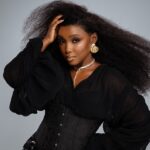


Nadia Mukami has publicly criticized WCB Wasafi after being excluded from a chart ranking the most viewed East African female artists on YouTube. The Kenyan singer, known for hits like “Si Rahisi” and “Radio Love,” revealed that she has amassed over 118 million views across her YouTube videos, making her exclusion puzzling.
Nadia took to social media to express her disappointment, describing the list as “null and void.” She questioned the credibility of the ranking and highlighted the inconsistency in recognizing artists’ digital achievements. Her statement has sparked conversations among fans and fellow musicians, with many supporting her claim that her viewership numbers merit acknowledgment.
WCB Wasafi, a leading East African music label, is known for promoting artists from Tanzania and across the region. The label has been behind several high-profile YouTube charts, but this recent oversight has raised questions about the criteria used for such rankings. Critics argue that view counts should be a transparent metric, and any list ignoring verified statistics risks losing credibility.
Nadia Mukami’s challenge comes at a time when digital metrics are increasingly used to gauge artist success in East Africa. YouTube views have become a vital indicator of popularity, often influencing bookings, brand deals, and award nominations. By publicly contesting the chart, Nadia has highlighted the importance of accurate reporting and fair recognition for female artists in the region.
Fans have rallied behind Nadia, sharing screenshots of her video view counts and calling for WCB Wasafi to address the discrepancy. The debate also underscores the broader conversation about representation of women in East African music, where male artists often dominate public attention.
Nadia Mukami’s statement is likely to prompt scrutiny of WCB Wasafi’s charts and potentially push for more transparent evaluation methods. As the conversation unfolds, her fans remain vocal in demanding that her achievements be officially recognized, reinforcing the growing influence of female artists in East Africa’s music industry.