

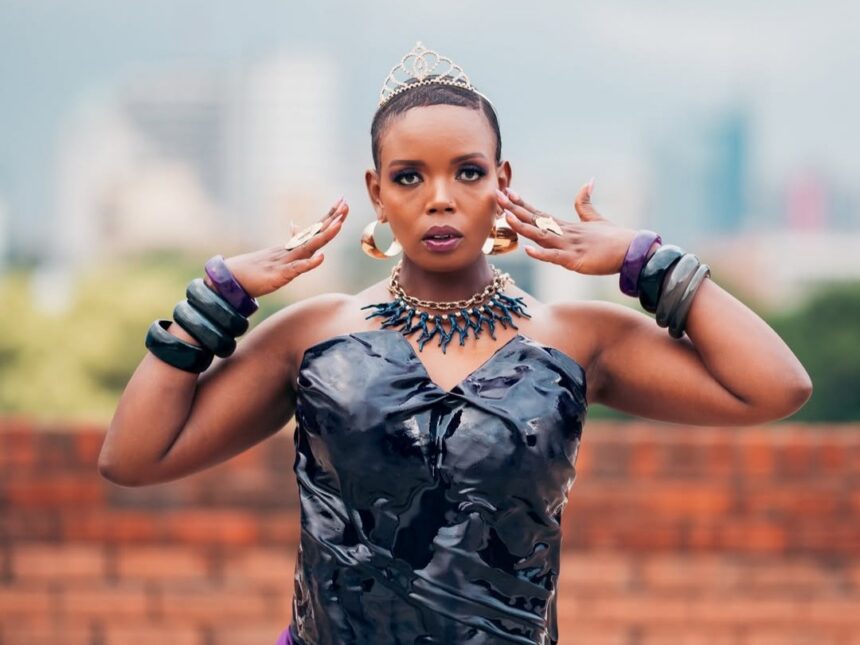
The mother of former Machachari actress Milly Machachari, Queen Gathoni, has shared a deeply emotional account of the abuse and hardship she says she endured during her marriage. Her testimony has drawn public attention after she detailed incidents of domestic violence, financial neglect and emotional distress in a past relationship. Speaking in a conversation shared on a public platform with Celestine Ndinda, she reflected on how her life changed after getting married at a young age. She described entering marriage with hope but later facing repeated suffering that affected both her and her child. Her account adds to ongoing conversations in Kenya about domestic violence and support systems for survivors.
Queen Gathoni explained that she got married at 21 and believed she was starting a stable family life. By the age of 25, she said she already had a three-month-old baby and was struggling to meet basic needs in the home. She described a situation where financial support from her partner was inconsistent, leaving her responsible for the baby under difficult conditions. One of the most painful moments she recalled happened during her child’s baptism ceremony, when she had to admit there was no food at home for visiting relatives. She said the experience exposed the level of hardship she was silently going through while trying to maintain appearances.
She further revealed that the pressure and stress affected her health and ability to breastfeed her baby. In her account, she said she was forced to rely on packet milk to feed her infant because she was not producing enough breast milk due to emotional strain and lack of proper nutrition. After the baptism event, she says the situation escalated when her husband returned home angry after learning she had spoken to his mother about the conditions in the household. She alleged that he physically assaulted her, including throwing her against a wall and stepping on her during the confrontation. She also stated that the incident was witnessed by a family member in the house, who ran to seek help from their mother.
Gathoni went on to explain that the abuse became a turning point that eventually pushed her to leave the marriage. She said the situation forced her to prioritize her safety and the wellbeing of her child, even though leaving was not easy at the time. Her story reflects the difficult choices many survivors face when dealing with domestic violence, especially when financial dependence is involved. She also expressed frustration that despite the seriousness of the alleged abuse, the individual involved has continued with his life and is now reportedly pursuing a political position. Her remarks highlighted concerns about accountability and how society responds to allegations of gender-based violence.
Her story has circulated widely through platforms including TUKO, adding to ongoing public discussions on domestic abuse and survivor experiences. Supporters have pointed to her openness as an important step in encouraging other survivors to speak out and seek help. Others have used her account to emphasize the need for stronger community and institutional responses to domestic violence cases. The conversation has also drawn attention to the importance of financial independence and access to support services for young mothers in vulnerable relationships. Her experience continues to resonate as part of a broader national dialogue on safety, justice and recovery for survivors of abuse.