

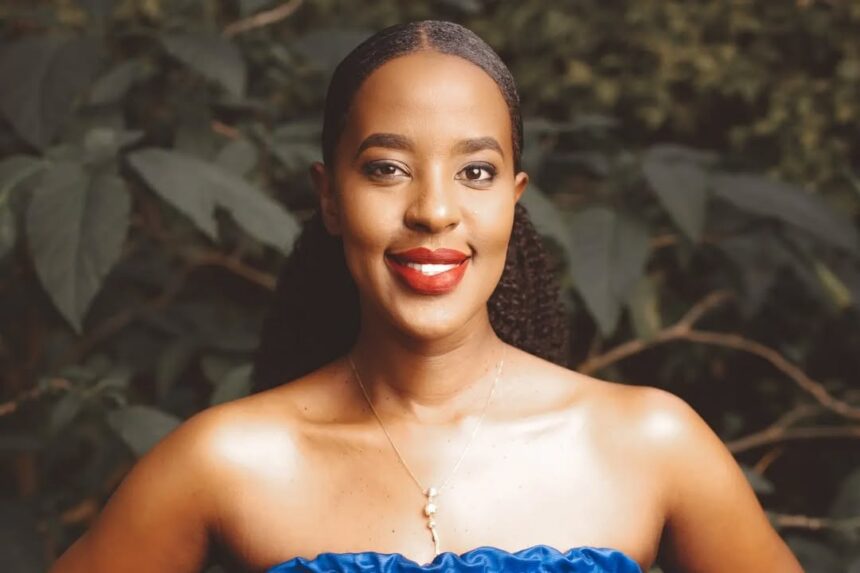
Lilian Nganga has opened up about her emotional journey following her separation from former Machakos governor Alfred Mutua, revealing that she once felt deep shame connected to her past role as a first lady and her public identity. The mother of one shared her experience in a candid video that quickly sparked conversations online about healing, identity and personal growth. She explained that her feelings were not tied to regret alone but also to how people perceived her life after her relationship ended. Her reflections highlighted how public scrutiny can shape personal confidence and self-expression. The discussion has since resonated with many who have experienced major life transitions under public attention.
Lilian explained that her emotional struggle resurfaced when she received a call about an interview regarding her book, which documented parts of her journey as a first lady. Her immediate reaction was disbelief, as she momentarily denied being an author despite having written and published the work. She later reflected on why she responded that way and realized it was linked to her desire to distance herself from a past relationship that had ended. She noted that she had written the book after her separation and feared that continuing to promote it would make people assume she had not moved on. This internal conflict led her to question how much of her identity was still tied to her former public role.
She further revealed that public criticism played a major role in shaping her hesitation to revisit her past work. According to her, online attacks and negative commentary made her want to quietly move forward without revisiting earlier chapters of her life. She described a period where she preferred silence over public discussion, especially regarding her previous role as a first lady. This desire to avoid attention made her feel disconnected from something she had previously created with pride. Over time, however, she began to re-evaluate that mindset and recognize the importance of owning her full story.
Lilian Nganga later shared that she has now come to terms with her journey and no longer feels ashamed of her past. She emphasized that her experiences, including her time as a first lady and her transition after separation, are part of her personal growth. She announced that her book would be made available as an eBook on Amazon, framing it as part of her legacy for her child. She expressed pride in the idea that her story could serve as a record of her life journey and a meaningful message for future generations. Her decision reflects a shift from avoidance to acceptance and ownership of her narrative.
Lilian also used her platform to encourage others to embrace their past experiences without shame. She urged social media users not to disconnect from their history, explaining that every stage of life contributes to personal identity. According to her, people often struggle with parts of their past because of external judgment rather than personal truth. She emphasized that growth involves accepting all chapters of life, even the difficult or uncomfortable ones. Her message was clear that healing comes from acknowledging rather than rejecting one’s journey.
The conversation around her statement has sparked wider reflection on how public figures navigate personal transitions under constant scrutiny. Many people related to her experience of feeling judged for past decisions, especially after relationship changes or career shifts. Her openness has been seen as a reminder that identity is not fixed but evolves over time. It also highlights how public perception can influence private emotions long after life circumstances have changed. Her story has encouraged discussions about self-acceptance and resilience in the face of criticism.
Lilian Nganga’s reflections ultimately point to a broader message about embracing personal history without letting shame define it. Her journey shows how individuals can move from discomfort to confidence by reframing their experiences as part of growth. By reclaiming her story and encouraging others to do the same, she has positioned her past not as a burden but as a foundation for her present identity. Her message continues to resonate with audiences navigating their own transitions, offering a perspective grounded in acceptance, healing and forward movement.