

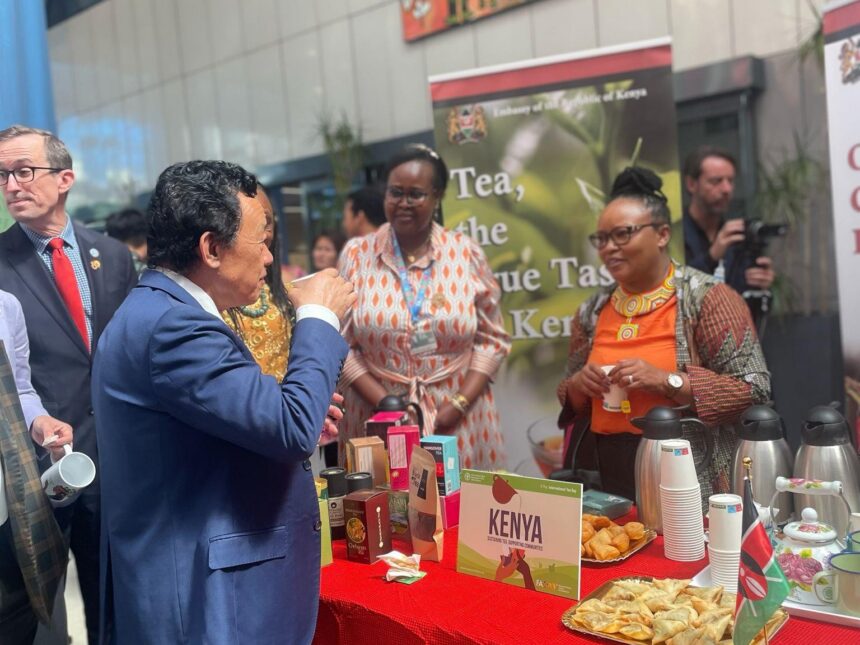
The Kenya Embassy in Rome, under the leadership of Deputy Head of Mission Amb. Rose Sumbeiywo, has highlighted Kenya’s strong agricultural identity during the International Tea Day celebrations hosted at the Food and Agriculture Organization of the United Nations (FAO) Headquarters in Rome. The event placed Kenyan tea at the center of global attention, allowing international guests to engage directly with one of the country’s most important export products. Kenya used the platform to emphasize both cultural pride and economic strength through its tea industry. The celebration also reinforced Kenya’s long-standing reputation as a leading global tea producer. The embassy’s participation showed a strategic effort to strengthen Kenya’s agricultural diplomacy.
During the event, the Kenya Embassy presented a curated display of Kenyan tea products, showcasing the diversity and richness of the country’s tea-growing regions. Guests were introduced to different varieties of tea, each reflecting unique growing conditions and processing techniques from Kenya’s highland areas. A live tasting demonstration allowed attendees to experience the flavour profile that has made Kenyan tea popular across international markets. The aroma, color, and taste were used to highlight the quality standards that define Kenyan tea exports. This hands-on approach helped guests better understand the value behind Kenya’s agricultural output.
Amb. Rose Sumbeiywo and her team used the occasion to promote Kenya’s tea traditions, linking production to cultural heritage and community livelihoods. The embassy emphasized that tea farming supports millions of Kenyans, particularly small-scale farmers who depend on the crop for income and stability. By presenting this perspective, the embassy connected global consumers to the human story behind each cup of tea. The message also underscored the importance of sustainable farming practices that continue to support Kenya’s agricultural economy. This narrative positioned Kenyan tea as both a commercial product and a cultural symbol.
The International Tea Day celebration at the FAO Headquarters provided a high-level platform for Kenya to engage with global stakeholders in agriculture and trade. Representatives from different countries had the opportunity to interact with Kenyan officials and learn more about the country’s tea value chain. Discussions around quality control, export standards, and global market trends formed part of the broader exchange. Kenya’s participation reinforced its commitment to maintaining strong partnerships within the international agricultural community. The event also highlighted the role of multilateral institutions in supporting global food systems.
Kenya’s presentation stood out for its focus on authenticity and direct engagement, allowing visitors to experience the product rather than only hearing about it. The embassy ensured that the tasting experience reflected real Kenyan tea preparation methods, giving guests a genuine sense of its cultural roots. This approach helped strengthen appreciation for the country’s agricultural identity and its contribution to global tea consumption. It also demonstrated how diplomacy can extend beyond formal discussions into cultural and sensory experiences. Through this, Kenya positioned itself as both a supplier and storyteller in the global tea industry.
The celebration also served as a reminder of Kenya’s consistent ranking among the world’s top tea producers. Its high-quality output continues to meet international demand while supporting economic growth at home. The embassy’s showcase in Rome highlighted how agricultural exports remain a key pillar of Kenya’s international trade strategy. By participating in global events like International Tea Day, Kenya continues to reinforce its presence in critical markets and institutions. The focus remains on strengthening visibility and expanding opportunities for farmers and exporters.
The Kenya Embassy’s participation at the FAO headquarters reflects a broader effort to promote national products through cultural diplomacy and international engagement. The event successfully connected Kenya’s agricultural heritage with global appreciation, positioning tea as both an economic driver and cultural ambassador. It also strengthened awareness of Kenya’s role in shaping global tea markets through quality and consistency. The celebration ended with a renewed recognition of Kenya’s leadership in tea production and its commitment to sharing its heritage with the world.