

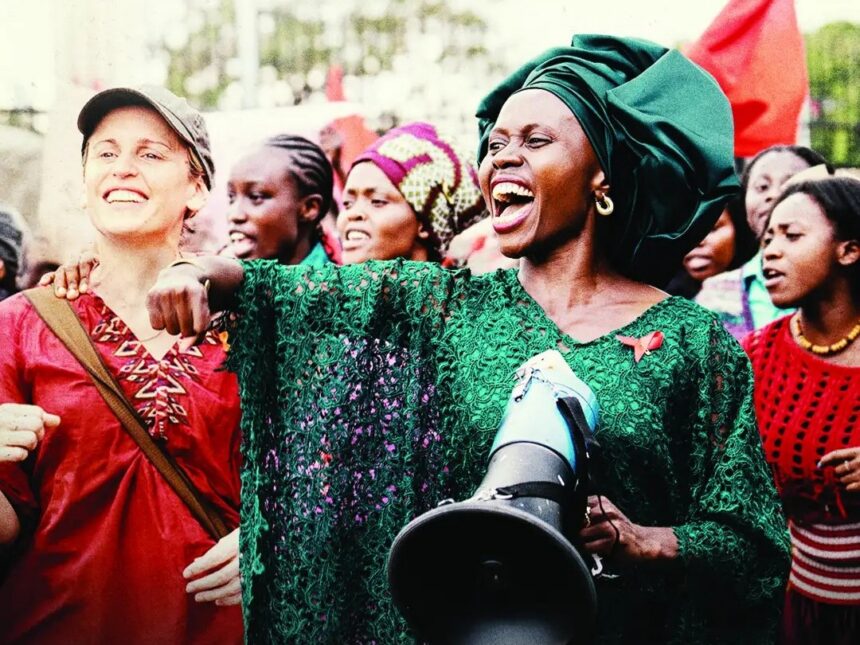
The Kenya-set international co-production Call Me Queen is set to reach Kenyan cinemas on 30 October 2026, bringing a powerful story about motherhood, friendship, the AIDS crisis and access to life-saving treatment to local audiences. The film has also released its official trailer ahead of its theatrical rollout, offering audiences a first extended look at the drama and its international cast. Set in Nairobi during the late 1990s, the film explores a period when HIV and AIDS had devastating consequences across communities while access to effective treatment remained severely limited. At the centre of the story are Queen, a Rwandan single mother living in a Nairobi slum, and Anna, an Irish journalist who becomes connected to her struggle. Their relationship develops into a wider fight against powerful pharmaceutical companies accused of withholding treatment that could save lives.
Call Me Queen is adapted from Lara Santoro’s 2007 novel Mercy and brings together filmmakers and performers from several countries while maintaining a strong connection to Kenya. The story’s Nairobi setting places the Kenyan capital at the centre of an international production that examines issues with both historical and contemporary relevance. By focusing on Queen’s personal experience, the film gives a human dimension to the wider crisis surrounding HIV and AIDS during the late 1990s. Anna’s position as a journalist introduces another perspective, allowing the story to examine the role of reporting and international attention in confronting powerful institutions. The combination of personal drama and broader political and social questions gives Call Me Queen a strong foundation as it prepares for its Kenyan theatrical release.
The film is directed by German-born French-Iranian filmmaker Emily Atef, who has established an international reputation through feature films that have received attention at major festivals. Atef previously directed More Than Ever, released in 2022 and selected for the Cannes Film Festival’s Un Certain Regard section. She also directed Someday We’ll Tell Each Other Everything, a 2023 film that was nominated for the Berlin Golden Bear. Her involvement in Call Me Queen adds an experienced international filmmaker to a production rooted in a Kenyan setting and a story involving several African and European perspectives. Atef also contributed to the screenplay, helping shape the adaptation for the screen.
Atef worked on the screenplay with Kenyan-Ghanaian filmmaker Hawa Essuman, Jeannine Dominy and Josune Hahnheiser. Essuman is known for her work on Soul Boy and brings a strong connection to East African filmmaking to the project. The collaboration between the writers is particularly significant because Call Me Queen deals with a historical period in Africa while also incorporating characters from different cultural backgrounds. Adapting Mercy for the screen required the filmmakers to translate a literary story into a visual narrative while preserving its central themes. The result is an international creative collaboration that places Kenyan characters, locations and experiences within a broader global story.
French-Rwandan actress Eliane Umuhire leads the film as Queen, bringing a central African perspective to a story set in Nairobi. Umuhire has gained international recognition for her performances and has also appeared in A Quiet Place: Day One. Irish actress Denise Gough plays Anna, the journalist whose relationship with Queen becomes central to the narrative. Their characters represent different backgrounds and experiences, but the film connects them through their response to the devastating consequences of the AIDS crisis. Their performances are expected to be central to the emotional impact of Call Me Queen as the two women confront powerful forces while trying to protect lives.
The international cast also includes several recognisable names from film and television. Dominic West, known for The Crown, appears alongside Danny Sapani of The Diplomat, while Charlie Carrick and French actor Laurent Lafitte also feature in the production. Their involvement gives Call Me Queen a cast with experience across international film and television productions. The presence of established European and British actors alongside African performers reinforces the film’s international character. At the same time, the story remains firmly connected to Nairobi through its setting and Kenyan cast.
Kenyan actors form an important part of the production, with Nice Githinji, Michelle Tiren, Lwanda Jawar, Helen Keli, Gerald Langiri, Alan Oyugi and Edwin Ekirapa among those appearing in the film. Their participation gives the Nairobi setting a local performance presence and adds Kenyan talent to the international ensemble. Githinji has appeared in projects including Subterranea, while Tiren is known for Nawi. Jawar has featured in Pepeta, Keli in Lazizi, Langiri in 40 Sticks, Oyugi in Lusala and Ekirapa in Monkey Business. Their involvement also reflects the growing role of Kenyan performers in productions designed for international audiences.
The late 1990s setting is central to the story because it places the characters in a period when the AIDS crisis was creating enormous social and medical challenges. Queen’s circumstances as a single mother living in a Nairobi slum provide a personal entry point into those wider realities. Her struggle becomes linked to questions about who has access to treatment and what happens when essential medicines remain beyond the reach of vulnerable communities. Anna’s work as a journalist brings another layer to the narrative as she becomes involved in the fight against pharmaceutical companies. The film therefore combines the intimacy of two women’s relationship with a larger story about health, inequality, corporate power and access to medicine.
The release of the official trailer gives audiences an early indication of the film’s tone and dramatic direction ahead of its theatrical debut. Trailers play an important role in building anticipation for films, particularly international productions that need to introduce audiences to unfamiliar stories and characters. For Call Me Queen, the trailer arrives several months before the planned Kenyan release, giving cinemas, audiences and film communities time to engage with the project. Its release also draws attention to the film’s Nairobi setting and its combination of Kenyan and international talent. The theatrical rollout could further increase interest in locally produced and internationally connected stories reaching Kenyan cinema audiences.
Call Me Queen will also have an international release schedule beyond Kenya. The film is scheduled to open in Germany on 15 October 2026, ahead of its Kenyan theatrical release later that month. It is also set to screen during the 2026 Toronto International Film Festival’s Market Screenings on 10 and 11 September. These international screenings provide opportunities for industry professionals and audiences outside Kenya to encounter a film that places Nairobi and an African historical experience at the centre of its narrative. The international rollout could also help raise the profile of the Kenyan locations, performers and creative talent involved in the production.
Crimson Multimedia and Yakwetu are handling distribution for the Kenyan release, positioning the film for a local theatrical rollout on 30 October 2026. Distribution will be important in connecting the film with Kenyan audiences and ensuring that the project receives visibility within the country’s cinema market. The involvement of Kenyan distribution companies also adds a local industry component to an otherwise international production. As the release date approaches, audiences can expect more promotional activity around the film, including attention to its trailer, cast and story. The Kenyan release will ultimately provide an important opportunity for local viewers to experience a film that uses Nairobi as a key setting rather than simply as a backdrop.
The arrival of Call Me Queen also highlights the potential of international co-productions to bring Kenyan stories and settings to wider audiences. The film combines European and African creative talent while telling a story that is closely connected to Nairobi and the wider history of the AIDS crisis. Its cast includes established international names alongside Kenyan performers, while its screenplay brings together writers from different creative backgrounds. That structure gives the production an international reach without removing the importance of its Kenyan setting. For audiences interested in Kenyan cinema, African stories and international film, the project offers another significant release to watch in 2026.
With its official trailer now released and its Kenyan theatrical date confirmed for 30 October 2026, Call Me Queen is entering an important stage of its rollout. The film brings together a compelling cast, an experienced international director and a screenplay adapted from a well-known novel, while placing Nairobi at the heart of its story. Its focus on Queen and Anna provides a personal way of exploring the AIDS crisis and the wider struggle for access to life-saving treatment. The film’s screenings in Toronto and its German release will also give it an international platform before Kenyan audiences see it in cinemas. Call Me Queen is therefore shaping up as a notable Kenya-set international co-production, with its October release offering local audiences an opportunity to engage with a serious historical drama that connects personal lives to global questions of health, inequality and corporate power.