

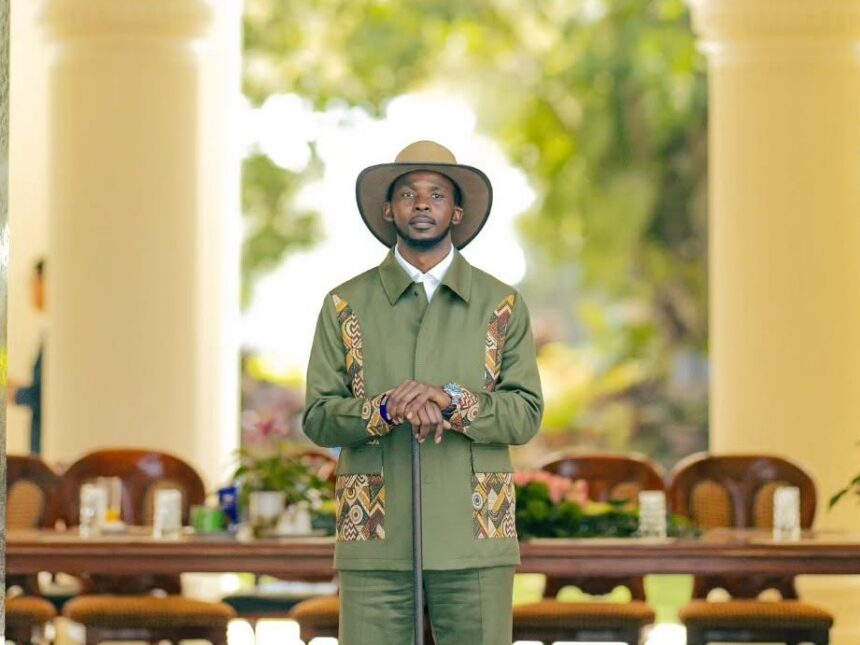
A resurfaced video of Isaya Yunge, who is known publicly as Charlene Ruto’s fiancé, has sparked widespread conversation online after he opened up about some of the most difficult experiences of his childhood. In the emotional footage, Yunge spoke candidly about growing up after his parents divorced and moving between foster families before eventually living with his grandmother. His account offered a rare glimpse into the personal challenges that shaped his early years and influenced the person he became. The video, which resurfaced on TikTok, quickly attracted the attention of Kenyans who praised him for speaking openly about experiences that are often difficult to discuss publicly. Many viewers also drew comparisons between his story and the childhood experiences of former United States president Barack Obama.
The video was shared on TikTok by Lightcast TV Kenya on August 10, 2026, and appears to have been recorded at a TEDx-style indoor event. Yunge can be seen speaking into a microphone in front of a dark curtain backdrop as he reflects on different stages of his life. His delivery is calm and measured, but the subject matter reveals the emotional weight attached to the experiences he was discussing. Rather than presenting his childhood as a simple story of hardship, he described circumstances that affected his family life, sense of belonging and personal development. The resurfaced footage has therefore given social media users an opportunity to hear a more personal side of Yunge beyond his public profile and relationship with Charlene Ruto.
Yunge revealed that his parents divorced when he was young, an experience that significantly changed his upbringing. He explained that he moved from one foster family to another before eventually spending time with his grandmother. This meant that his formative years were shaped by different homes and family environments rather than the stability many children experience while growing up. He recalled his grandmother as someone who played an important role in preserving his connection to his cultural roots, particularly through language. According to Yunge, she insisted on speaking only their native language, making that aspect of his upbringing an important part of his identity.
His reflections highlight how family circumstances during childhood can have a lasting effect on a person’s understanding of home and belonging. Moving between foster families can expose a child to different environments, expectations and relationships while also creating uncertainty about where they truly belong. Yunge’s decision to discuss these experiences publicly shows that his childhood was not defined solely by the opportunities he may have had later in life. Instead, his story includes periods of uncertainty, adjustment and emotional difficulty that he had to navigate from a young age. His grandmother’s influence appears to have provided an important connection to his culture and family history during a period when much of his childhood was changing around him.
Yunge also spoke about another deeply painful experience involving the loss of a baby, which he connected to a difficult period in his professional life. He described watching one of his companies struggle financially and compared the emotional experience to losing a child. The situation became particularly difficult because he felt that he did not receive the emotional support he needed from a family member when he reached out for help. Yunge recalled seeking support from an uncle but described the response as dismissive rather than comforting. His account illustrated how financial pressure can become emotionally overwhelming when someone is already carrying personal challenges and does not feel supported by the people around them.
The way Yunge described his struggling company revealed how emotionally connected he had become to the business he was building. For entrepreneurs, a company can represent years of work, personal sacrifice, ambition and hope for the future, which can make financial difficulties feel deeply personal. Yunge’s comparison to losing a child demonstrated the seriousness of the emotional impact the experience had on him. He described the situation as a mental breaking point and explained how painful it was to watch something he had invested in deteriorate. His comments have resonated with viewers because they present entrepreneurship from a personal perspective rather than focusing only on financial success.
The resurfaced video has also prompted Kenyans to discuss the importance of resilience and the different paths people take before reaching positions of visibility. Many viewers praised Yunge for continuing to move forward despite the difficulties he described during his childhood and later life. His story has encouraged comparisons with Barack Obama, whose own memoir and public speeches have often focused on growing up without his father and navigating a complex family background. Although the circumstances of their childhoods are not identical, social media users have focused on the similarities surrounding family separation, identity and personal resilience. These comparisons have helped fuel further interest in Yunge’s story and the experiences that contributed to his outlook on life.
The renewed attention comes as Yunge is increasingly recognised by the public through his relationship with Charlene Ruto, the daughter of President William Ruto. Public interest in people connected to prominent political families often extends beyond their relationships and into their personal backgrounds, careers and public appearances. In Yunge’s case, the resurfaced video has shifted attention towards experiences that existed long before his relationship became a subject of public discussion. His childhood story has given social media users a different perspective on the person they may have previously known mainly through his public association with Charlene. It has also demonstrated how old speeches and videos can suddenly attract large audiences when they resurface on platforms such as TikTok.
The emotional response to the footage also reflects a broader interest in stories of overcoming adversity. People often connect with public figures when they reveal experiences that show vulnerability, especially when those experiences involve family struggles, loss and periods of uncertainty. Yunge’s account has resonated with viewers because he spoke about circumstances that many people can understand on different levels, including growing up without both parents, moving between homes and dealing with personal setbacks. His willingness to discuss these experiences has encouraged conversations about resilience, family support and the emotional challenges that can accompany success. The reaction suggests that audiences remain interested in the human stories behind people who later become publicly recognised.
For Yunge, the resurfaced video has placed his personal journey at the centre of an unexpected online conversation. What began as an old speech about his childhood and personal struggles has become a widely discussed piece of content because viewers are interested in how his experiences shaped his character. His story serves as a reminder that a person’s public image rarely captures everything they have experienced before reaching the point at which they become known. From moving between foster families to living with his grandmother and later confronting painful professional setbacks, Yunge described a journey marked by significant challenges. The positive reactions from many Kenyans show that his openness has allowed people to connect with a side of his story that they may not have known.
The resurfaced footage has ultimately given Isaya Yunge an opportunity to share a story that extends beyond his current public profile. His experiences of family separation, foster care, cultural upbringing, loss and professional hardship form a personal history that helps explain the resilience viewers have praised online. While social media discussions can quickly turn personal stories into trending topics, the substance of Yunge’s account remains centred on the challenges he faced and the lessons he appears to have carried forward. The comparisons with Barack Obama have added another layer to the conversation, but Yunge’s journey remains uniquely his own. As the video continues to circulate, it has reminded audiences that behind public recognition can be years of struggle, growth and experiences that rarely appear in the headlines.