
The 17th edition of Durban FilmMart has recognised filmmakers from across Africa and beyond, highlighting the growing range of stories emerging from the continent’s film industry. Tanzania-Kenya co-production The Ones With the Tempered Flowers emerged as the most-awarded project at the 2026 industry market, securing five awards for its experimental documentary approach to womanhood, family history and personal experience. Other notable winners included Kenya’s Heirs of No Regret, Ethiopia’s Sunday Morning, Sudan’s Where Do I Belong? and Four Months and Ten Days. The awards ceremony took place as the industry gathering concluded in Durban on 12 October 2026, following four days of project presentations, professional networking and industry activities. Organisers reported that this year’s event brought together 1,131 film professionals and filmmakers from 56 countries, underlining Durban FilmMart’s role in connecting African filmmakers with international festivals, financiers and development programmes.
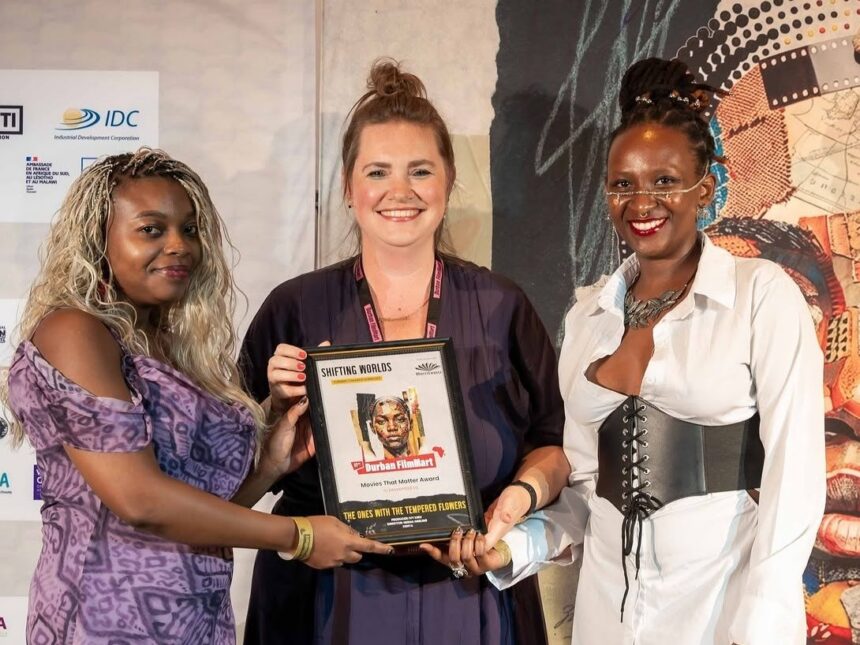
The Ones With the Tempered Flowers, produced by Kenyan filmmaker Ivy Kiru and directed by Tanzanian filmmaker Neema Ngelime, received five awards at Durban FilmMart 2026. Its recognitions included the National Film and Video Foundation’s Best Non-fiction Award, which carries a R100,000 grant. The project also received the DOK Leipzig Award, providing an opportunity to participate in the 2027 DOK Co-Pro Market, as well as the Movies That Matter Award and the Sheffield DocFest Award. The latter includes an industry pass and a submission waiver for the 2027 MeetMarket, while the Visions du Réel Award offers participation in the festival’s 2027 market. These opportunities provide the production team with financial support and access to international industry platforms that can help advance the documentary’s development and visibility.
The documentary explores Ngelime’s personal journey following her diagnosis with fibroids, using her experience to examine broader questions about women’s bodies, family history and social expectations. The experimental project considers how ideas about womanhood influence individual experiences and relationships, with the filmmaker drawing on her own circumstances to explore wider issues affecting women in Tanzania. Its combination of personal reflection and social inquiry places the project within a documentary tradition that uses individual stories to examine larger cultural questions. The film is being produced under AQ Pictures and LBx Africa. It also received two awards at Locarno Open Doors 2026 in August, adding to its recognition at international film industry platforms before its success in Durban.
Kenya’s Heirs of No Regret, also known as Majuto Si Mjukuu, was another significant East African winner at the 2026 Durban FilmMart awards. Produced by Mumo Liku and directed by Saitabao Kaiyare, the documentary received the Red Sea Film Fund Award for Non-Fiction, which comes with a US$5,000 grant. The film follows artist Shabu Mwangi as he considers whether to continue his artistic career or enter politics. His personal dilemma unfolds against the backdrop of Kenya’s Gen Z protests, which brought young people and questions about political accountability, leadership and public participation into national debate. By connecting an artist’s career decisions with a wider period of civic engagement, Heirs of No Regret explores the relationship between creative expression and political life in Kenya.
Ethiopia also secured recognition through Sunday Morning, an animation project produced by Nahom Abiy and directed by Minasie Terefe. The project won the National Film and Video Foundation’s Best Animation Award, worth R100,000, along with the Animation Production Days Award. The two awards provide recognition for the project while creating opportunities to engage with professionals working in animation production and development. Animation offers filmmakers a range of ways to approach storytelling, including visual experimentation and narratives that may be difficult to convey through conventional live-action filmmaking. Sunday Morning’s success demonstrates the presence of Ethiopian animation within a regional industry market that supports projects across several formats and stages of development.
Madagascar was represented by Fitampoha, The Return of the King of Menabe, a documentary directed by Ramaroson Anatole. The project received the FIDADOC Award, which offers participation in the 2027 FIDADOC Pan African Writing Residency. The opportunity provides a pathway for the filmmaker to develop the project through a programme focused on writing and creative development. Its recognition also places a documentary from Madagascar among the projects benefiting from Durban FilmMart’s international industry partnerships. Together with the awards received by Kenyan, Tanzanian and Ethiopian projects, this achievement reflects the geographical range of African filmmaking represented at the event.
Sudanese filmmakers also received important recognition, with Where Do I Belong? collecting four awards at Durban FilmMart 2026. Produced by Talal Afifi and directed by Ibrahim “Snoopy” Ahmad, the documentary received the Docubox Award, worth US$5,000, and the Sundance Institute Documentary Fund New Voices Award, also worth US$5,000. It additionally received the Sørfond Award and the DOK.fest München Award, offering opportunities to participate in international industry programmes and marketplaces. The combination of cash grants and professional development opportunities gives the project several forms of support as it progresses. Its success illustrates how documentary projects can benefit from a combination of funding, industry access and connections with organisations that work with filmmakers internationally.
Another Sudanese project, Four Months and Ten Days, received the Rotterdam Lab Award and the TorinoFilmLab Next Award. Produced by Samo Hussein, with Anna Stylińska as co-producer, and directed by Alyaa Musa, the project secured opportunities to participate in programmes associated with international film development. The Rotterdam Lab Award includes accommodation and accreditation for the Rotterdam Lab, while the TorinoFilmLab Next Award provides a place in the programme, with the specific development stage to be determined in consultation with the lab. Such opportunities can help filmmakers strengthen their projects, exchange ideas with industry professionals and build relationships that support future production and distribution. The recognition of two Sudanese projects also demonstrates the range of work emerging from the country and the different forms of support available to filmmakers at the market.
The Democratic Republic of Congo was represented by The Basement, directed by Mélanie K. Zawadi. The project received the DFMI Talents Durban Award, which offers flights, accommodation and accreditation for participation in the 2027 Durban FilmMart Pitch and Finance Forum. The forum provides a professional setting for filmmakers to present their projects and engage with potential partners. Participation can help project teams communicate their creative vision, refine their proposals and explore possible routes towards financing. For a project still moving through the development process, access to an industry forum can be an important step in building the relationships required to advance production.
Beyond the East African and Sudanese winners, Durban FilmMart 2026 recognised projects from several other African countries and territories. Algeria’s The Thread and the Wall, also known as Le Fil et le Mur, directed and produced by Mouni Bouallam, received the JustFilms Documentary Award, worth US$10,000. Palestine’s On the Sea Road, directed by Fitnat Waked with the participation of Nour Obaid, won both the Al Jazeera Co-production Award and the TRT Award, each worth US$10,000 and US$5,000 respectively. Libya’s The Birth of Derna, directed by Hussein Eddeb, received the Climate Story Labs Award, worth US$10,000, alongside other industry opportunities. These awards highlight the diversity of stories and production approaches represented at the market, from documentary filmmaking to projects designed for international co-production.
Nigeria also featured prominently in the awards programme. The Boy Who Spoke Static received the National Film and Video Foundation’s Best Fiction Award, worth R100,000, and the Red Sea Film Fund Award for Fiction, worth US$5,000. The project is associated with the Agbajowo Collective, which includes Temitope Ogungbamila, Samuel Okechukwu, lead producer Mat Cerf and Bisola Akinmuyiwa. The project also received the Sørfond Award, providing access to the pitching forum and a pitch course. Other Nigerian projects recognised included Pülö: Bloodstream of the Kirike, directed and produced by Christina Ifubaraboye, which received the Sunshine Cinema UCT Impact Development Award, and My Djomélé Night from Burkina Faso, which won the RRImpact Pitch Prize. These recognitions show how the market supports projects through different forms of financing, professional training and audience engagement opportunities.
South African filmmakers also received recognition at their home country’s major film industry gathering. Daddies, produced by Catharina Weinek and directed by Sean Mongie, won the Inkaba Award from Stained Glass TV, worth R30,000. Waiting for Evolution, produced and directed by Karin Slater, and Designing Divide, produced and directed by Jessie Ay, were among the projects associated with distribution consultancy opportunities from Impronta Films. Zimbabwe’s Second Bloom, directed by Tendaiishe Chitima, received the Wrapped App Award and the NEWF Summit Attendance Award. Egypt’s Green Island Girls, produced by Amrosh Badr and directed by Rogena Tarek, received the Whickers Bursary Award, worth £3,000. These projects demonstrate the breadth of the awards programme, which recognises different creative disciplines and offers support tailored to specific production needs.
The awards also included opportunities designed to help filmmakers develop distribution plans, strengthen their fundraising strategies and build relationships with audiences. The Women Make Movies Award, which recognises the best pitch by a woman filmmaker, went to On the Sea Road. The award includes entry into the organisation’s Production Assistance Program, with support for fundraising, distribution planning, project consultations and promotion. Other awards offered access to festivals, professional markets, writing residencies and specialist development programmes. These benefits are important because a film project requires more than an initial grant to reach completion and find an audience. Depending on the project, filmmakers may need additional development time, production partners, post-production support, distribution advice and opportunities to present their work to international buyers or festival programmers.
In total, Durban FilmMart 2026 presented 39 awards from 30 partners, with a combined value exceeding R2 million, equivalent to more than US$120,938. The programme included cash grants, festival participation, industry accreditation, mentorship, development opportunities and distribution support. This mix of awards reflects the different challenges that filmmakers face as they move projects from early concepts towards completed films. Direct funding can help cover development costs, while access to industry markets can introduce filmmakers to potential co-producers and other professional partners. Mentorship and specialist programmes can also help creative teams strengthen their projects and prepare them for the next stages of production.
Magdalene Reddy, director of the Durban FilmMart Institute, said the quality of the projects presented at the 2026 edition was exceptional, noting the originality and development of the work submitted by filmmakers. She also acknowledged the organisations, funders and festivals that contributed awards and professional opportunities. Her comments highlighted the value of prizes that go beyond cash grants, including access to markets, laboratories and mentorship programmes. Such partnerships connect filmmakers with the wider infrastructure needed to develop, produce and distribute films. The support offered at Durban FilmMart therefore extends beyond the awards ceremony itself, creating opportunities that can continue to benefit participating projects after the event ends.
Durban FilmMart has become an important meeting point for filmmakers seeking to develop African stories and connect with the international film industry. The 2026 edition brought together 1,131 professionals from 56 countries, while its 39 awards provided support to projects at different stages of development. The success of The Ones With the Tempered Flowers, Heirs of No Regret, Sunday Morning, Where Do I Belong? and Four Months and Ten Days placed African filmmakers and their projects at the centre of this year’s awards programme. Their recognition also highlights the different ways filmmakers approach personal histories, social questions, animation and documentary storytelling. As these projects pursue further development and international opportunities, the awards offer practical support and wider industry exposure, reinforcing Durban FilmMart’s role in connecting African cinema with audiences and partners around the world.