

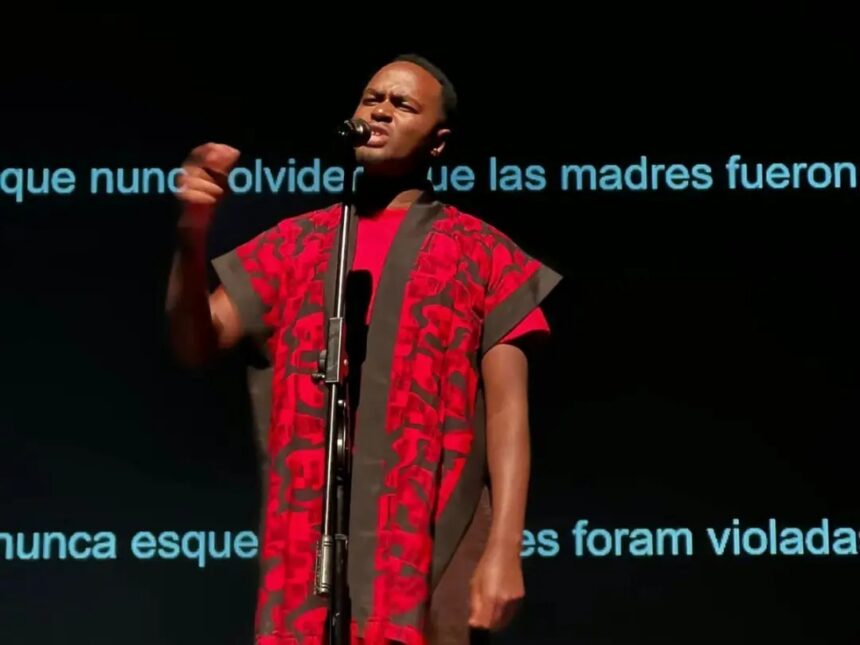
Kenyan spoken word artist Timelines has reportedly secured second place at the 2026 World Poetry Slam Championships in Durban, South Africa, earning a silver medal and bringing international recognition to Kenya’s poetry scene. The achievement places Kenya among the leading performers in a competition that celebrates the power of spoken word, creative expression and live performance. Switzerland claimed first place, while Canada finished third, completing the reported top three at the global event. Timelines’ performance highlights the growing visibility of Kenyan spoken word artists on the international stage. It also draws attention to poetry as an art form that allows performers to communicate personal experiences, social concerns and cultural identity through carefully crafted words.
The Kenyan poet, whose real name is Dennis Mwangi, has built his reputation through performance poetry and participation in Kenya’s competitive spoken word community. Before competing in Durban, he emerged as the 67th Poetry Slam Africa champion, an achievement that helped secure his place on the international stage. His journey reflects the work required to develop a distinctive poetic voice and perform confidently before diverse audiences. Spoken word artists must combine writing skills with vocal control, timing, stage presence and an understanding of how language affects listeners. Timelines’ silver medal therefore represents both an individual achievement and an important moment for Kenya’s spoken word community.
The 2026 World Poetry Slam Championship formed part of the 30th edition of the Poetry Africa Festival, hosted in Durban by the Centre for Creative Arts at the University of KwaZulu-Natal. The international competition brought together spoken word performers from 40 countries across five continents, creating a platform for cultural exchange and artistic competition. The event gave poets an opportunity to present their work to audiences beyond their home countries while engaging with different traditions, experiences and perspectives. Durban’s role as host also placed South Africa at the centre of an international celebration of literature and performance. For Kenyan audiences, Timelines’ second-place finish offered a reason to follow the event closely and celebrate the country’s representation on a global stage.
Switzerland’s Valerio Moser took first place, while Timelines finished second and Canada’s Maya Namatovu placed third, according to the reported final standings. The results demonstrate the international range of talent represented at the championship and the competitive standard required to reach the final positions. Poetry slams differ from conventional poetry readings because performers deliver their work live, making voice, rhythm, expression and audience connection central to the experience. Depending on the competition rules, performances may also be judged according to defined criteria and scores. This format rewards poets who can combine strong writing with an effective live presentation, making the competition a test of both literary skill and performance ability.
Timelines dedicated his achievement to young people from villages and informal settlements, as well as aspiring poets who have limited opportunities to share their stories. His message gave the silver medal a wider meaning by connecting his international success to the experiences and ambitions of other young Kenyans. For many emerging artists, access to training, performance venues, mentorship and funding can influence how far their careers progress. International competitions can help address some of these barriers by creating opportunities for exposure and professional connections. Timelines’ achievement may encourage aspiring writers to take their work seriously and explore spoken word as a platform for communicating their ideas.
Spoken word poetry has an important place in Kenya’s creative landscape because it offers an accessible way to explore identity, relationships, inequality, culture and everyday life. Unlike poetry that exists primarily on the page, spoken word relies on the relationship between language and performance. A poet can use pauses, changes in tone, repetition and movement to strengthen the meaning of a piece. These techniques allow performers to communicate complex emotions and social observations in ways that audiences can experience directly. For young people in particular, poetry slams can provide a space to develop confidence, sharpen communication skills and participate in conversations about issues affecting their communities.
Timelines’ second-place finish also highlights the need for stronger support structures for Kenyan spoken word artists. Talent and dedication are important, but poets also need opportunities to perform regularly, develop their writing and reach new audiences. Organisers, schools, cultural institutions and sponsors can contribute by supporting poetry competitions, workshops, festivals and creative development programmes. Better funding can help artists cover travel expenses, access professional opportunities and represent Kenya at international events. Strengthening the local poetry slam ecosystem would give more performers a pathway from community stages to regional and global competitions.
The achievement also creates an opportunity to increase public interest in Kenyan poetry beyond established literary circles. Media coverage, recorded performances and digital platforms can help spoken word artists reach audiences who may not attend live events. Online exposure can introduce new listeners to Kenyan stories, language and cultural experiences while creating opportunities for collaboration with international performers. However, lasting progress requires more than recognition after a major competition. Artists need consistent platforms where they can publish work, perform and earn income from their creative efforts. Timelines’ success provides a strong example of what Kenyan spoken word can achieve when local talent reaches an international audience.
Kenyan spoken word artist Timelines has reportedly made history for his career by winning the silver medal at the 2026 World Poetry Slam Championship in Durban, finishing behind Switzerland and ahead of Canada. His performance has brought attention to Kenya’s spoken word scene and highlighted the creative talent emerging from the country. His dedication to young people and aspiring poets also connects the achievement to the wider need for opportunities in the arts. As Kenya celebrates this international result, the next challenge is to turn recognition into sustained support for performers, writers and future poetry champions. Timelines’ silver medal stands as an encouraging moment for Kenyan poetry and a reminder that stories developed on local stages can reach audiences around the world.