

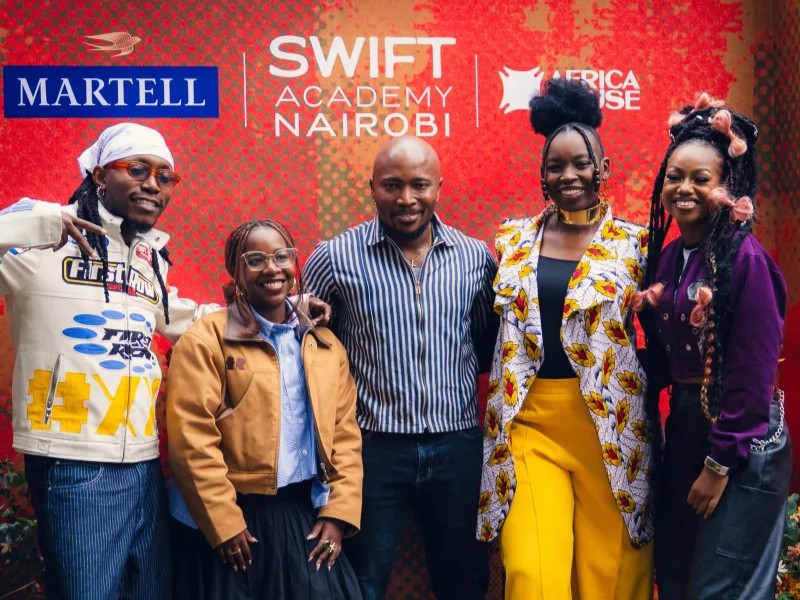
Swift Academy has brought new opportunities to Kenya’s music industry by giving 25 emerging creatives access to mentorship, industry sessions and practical studio experiences during its Nairobi launch week. The first cohort included artists, producers, songwriters and other music professionals who came together to learn, exchange ideas and build connections within the creative industry. Created by Martell and curated by Africa House, Swift Academy is a pan-African talent development platform designed to support emerging creative talent. Its Nairobi edition combined professional guidance with opportunities for collaboration and hands-on creative work. The initiative highlights the importance of investing in Kenya’s next generation of music professionals and creating an environment where talent can develop into sustainable careers.
The Nairobi launch week offered participants an opportunity to engage with different aspects of the music business while connecting with experienced industry professionals. The programme began with an opening mixer that allowed members of the cohort to meet, exchange ideas and establish relationships with fellow creatives and industry stakeholders. Industry sessions provided a space to explore the professional side of music, while one-on-one mentorships gave participants opportunities to receive more personalised guidance. Community activities encouraged collaboration and strengthened the relationships formed throughout the week. The experience concluded with a Studio 18 takeover, bringing the programme into a practical creative setting where participants could engage more directly with the music-making process.
For the 25 Kenyan creatives selected for the first Nairobi cohort, Swift Academy offered more than a chance to attend industry events. The programme brought together people working in different areas of music, creating opportunities to understand how their skills could complement one another. Artists need songwriters, producers and other professionals to help transform ideas into finished projects, while those professionals also benefit from relationships with performers and industry decision-makers. Bringing these groups together can encourage creative partnerships that extend beyond a single programme. The Nairobi experience therefore placed collaboration at the centre of its approach to talent development.
Mentorship was a key part of the initiative, giving participants the opportunity to learn from people with experience in the creative industry. Emerging artists often face difficult decisions about developing their sound, releasing music, building an audience and establishing professional relationships. Producers and songwriters encounter their own challenges as they seek projects, improve their skills and establish themselves in a competitive market. Direct conversations with experienced professionals can help creatives assess their strengths, identify areas for improvement and make more informed career decisions. By including one-on-one mentorships, Swift Academy created room for guidance that could respond to the different ambitions and needs of its participants.
Jade Kelly captured one of the challenges facing the Kenyan music industry when she said, “Kenya doesn’t have a lack of talent; it has a lack of infrastructure.” Her observation highlights the gap between the country’s creative potential and the resources emerging musicians need to develop their careers. Talented artists may still struggle without access to professional studios, industry contacts, training and reliable pathways to commercial opportunities. Mentorship programmes can help address some of these barriers by connecting participants with knowledge and networks that might otherwise be difficult to access. Swift Academy’s Nairobi edition placed these issues within a practical programme focused on learning, creating and building professional relationships.
The Studio 18 takeover added a hands-on dimension to the Nairobi experience. Studio environments allow musicians to explore ideas, collaborate with other creatives and better understand the technical and creative processes involved in producing music. For emerging artists, producers and songwriters, this type of exposure can help connect theoretical knowledge with practical experience. Working alongside other professionals can also reveal new approaches to songwriting, sound development and creative problem-solving. The studio component complemented the mentorship sessions by giving participants another way to engage with the realities of music production.
The opening mixer and community activities were equally important to the programme’s wider objectives. The music industry depends heavily on relationships, collaboration and trust, particularly when creatives work together on recordings, performances and other projects. Meeting people with different skills can introduce participants to new perspectives and possible collaborators. These connections may also help emerging professionals learn about opportunities, industry expectations and the practical challenges of building a career. By creating space for networking alongside training, Swift Academy recognised that professional growth involves both developing individual skills and becoming part of a wider creative community.
Monica Kemoli was also part of the conversations surrounding the Nairobi experience, helping bring attention to the value of industry knowledge and creative development. The programme’s focus on mentorship and professional engagement reflected the importance of learning from people who understand the demands of the music business. For young creatives, access to such guidance can help them look beyond immediate artistic goals and consider the steps required to build lasting careers. Understanding how the industry operates can influence decisions about collaborations, releases, professional conduct and long-term planning. These lessons are especially relevant for participants seeking to establish themselves in an increasingly competitive music market.
Martell celebrated the launch week with a message thanking Nairobi for an experience filled with learning, creativity and connection. The brand highlighted the opening mixer, industry sessions, one-on-one mentorships, community moments and Studio 18 takeover as key parts of the programme. It also thanked the mentors, partners and collaborators who contributed to the launch, while recognising the energy and ambition brought by the cohort. The message described the Nairobi experience as the beginning of a longer journey. This suggests that the launch was intended to establish a foundation for the participants rather than serve only as a one-week gathering.
Swift Academy’s Nairobi edition also draws attention to the wider need for structured support within Kenya’s creative economy. Music careers require more than artistic ability, as professionals must also understand the business, technical and collaborative aspects of the industry. Access to quality facilities, mentorship, training and professional networks can help emerging creatives navigate these demands. Programmes that bring these resources together can give participants a clearer understanding of the opportunities available to them and the skills they need to progress. Continued support after an initial programme is also important if participants are to turn new knowledge and relationships into measurable career development.
The participation of 25 Kenyan creatives marks an important starting point for Swift Academy’s engagement with Nairobi’s music community. By combining mentorship, industry sessions, networking and studio experiences, the programme offered a broad introduction to the skills and relationships that support creative careers. Its emphasis on collaboration recognised that the strength of a music industry depends on the people and systems that help talent grow. The initiative also created space for conversations about the infrastructure needed to support emerging Kenyan artists and music professionals. As the Nairobi cohort moves forward, the lasting value of Swift Academy will be reflected in how participants apply their learning, develop new projects and build stronger connections across Kenya’s music industry.