

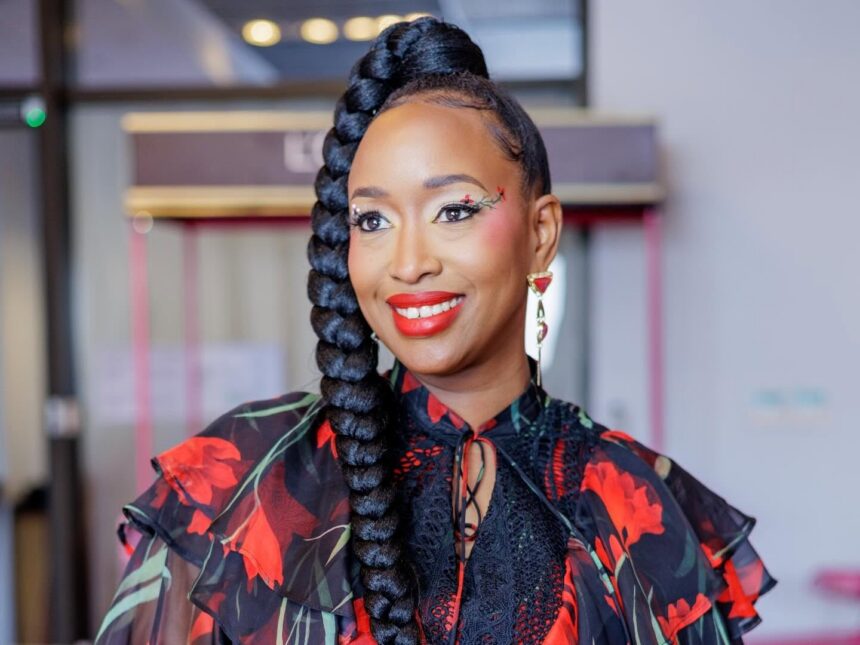
Janet Mbugua has opened up about a difficult health experience, revealing that worsening period pain has reached a point where she needed to seek medical attention. The veteran Kenyan media personality shared a candid selfie-style video in which she spoke honestly about experiencing increasingly severe pain and fatigue. Mbugua revealed that she has lived with endometriosis since her very first period, making the condition a long-standing part of her life. However, she said the symptoms she is experiencing now feel significantly different and more difficult to manage than before. Her decision to speak publicly about the changes has also encouraged other women to discuss menstrual health and seek professional help when their symptoms change.
In the video, Mbugua explained that her period pain had become so severe that she could no longer simply push through it. She said she had to visit a gynaecologist as she and her doctor work towards identifying an appropriate treatment plan for her current symptoms. The media personality did not present the experience as something women should simply accept as part of having periods. Instead, she described the changes in her body as a reason to pay closer attention and investigate what could be causing the increased discomfort. Her decision to share the experience publicly highlights the importance of seeking medical advice when menstrual symptoms become unusually severe or start affecting everyday life.
Mbugua also spoke about the fact that she is now in her 40s and has noticed a significant change in the way her body is responding to menstruation. Although she has lived with endometriosis for many years, she said the combination of pain and fatigue now feels markedly worse. Her comments reflected the frustration of someone who expected to understand her own menstrual health after years of dealing with the condition, only to experience symptoms that feel different. She explained that she does not want to simply accept the worsening symptoms as something she has to endure. Instead, she is treating the changes as a message from her body that deserves attention and proper medical assessment.
As part of the medical assessment, Mbugua confirmed that she had undergone a Pap smear and an ultrasound. She said she was waiting for the results of the tests, which she expected to receive within a couple of weeks, before determining the next step in her treatment. A Pap smear and an ultrasound can provide doctors with different types of information, depending on the symptoms being investigated and the reason for the tests. Mbugua’s decision to undergo these examinations shows that she is taking the change in her symptoms seriously rather than attempting to manage the situation without professional guidance. The final treatment approach will depend on her medical assessment and the results of the investigations.
Her experience has also brought renewed attention to endometriosis, a condition that can cause significant pelvic pain and other symptoms. Endometriosis occurs when tissue similar to the lining of the uterus grows outside the uterus, and symptoms can vary considerably from one person to another. Some women experience severe menstrual pain, while others may experience fatigue, pain outside their periods or other complications. The condition can have a significant impact on work, relationships, daily activities and overall quality of life. Mbugua’s account demonstrates how a condition that someone has managed for years can still change over time and require further medical assessment.
One of the most important aspects of Mbugua’s message was her refusal to treat worsening symptoms as something women should quietly tolerate. She encouraged other women to pay attention when their menstrual cycles or symptoms change instead of assuming that severe pain is always normal. This is particularly relevant for people who have lived with painful periods for years and may have become accustomed to working through discomfort. A significant change in pain, bleeding patterns, fatigue or other menstrual symptoms can be worth discussing with a qualified healthcare professional. Mbugua’s experience reinforces the value of understanding your own normal cycle and seeking medical advice when something feels noticeably different.
The media personality also used the video to create a broader conversation with women who may be experiencing similar changes. Rather than presenting herself as having all the answers, she invited her followers to share their own experiences and discuss what they have been going through. Her appeal resonated with many women online, with social media users responding by sharing their personal experiences with period pain and changing menstrual symptoms. Such conversations can help reduce the isolation that often surrounds reproductive health issues. They can also encourage women to speak more openly about symptoms that they may previously have considered too private to discuss.
Mbugua’s openness is particularly significant because menstrual health has historically been surrounded by silence and discomfort in many communities. Women can face pressure to continue working, caring for families and maintaining daily routines even when they experience debilitating symptoms. This can make it difficult for people to recognise when pain has moved beyond what they should simply tolerate. By sharing her experience, Mbugua has helped place period pain, endometriosis and changing menstrual symptoms into a more visible public conversation. Her story also demonstrates that seeking medical care does not mean someone has failed to manage their body, but can instead be an important step towards understanding what has changed.
For Mbugua, the immediate focus remains on understanding why her symptoms have become more difficult and determining what treatment may be appropriate. The tests she has undergone are part of that process, while the results will give her medical team more information to consider. She has also made it clear that she intends to listen to her body rather than dismiss the changes she is experiencing. Her approach offers an important reminder that menstrual symptoms can change and that long-term conditions may require ongoing medical care. While her experience is personal, the conversation it has started has relevance for many women who have questions about their own menstrual health.
Janet Mbugua’s candid health update has therefore become more than a personal disclosure about period pain. It has opened a wider discussion about endometriosis, changing menstrual symptoms and the importance of seeking medical attention when pain becomes unusually severe. Her willingness to speak about living with endometriosis since her first period also shows that even people who have spent decades managing a condition can experience new or unexpected challenges. As she waits for her test results and works with her gynaecologist on the next stage of her care, her message to other women remains clear: changes in your body deserve attention. Her story encourages women to listen to their bodies, ask questions and seek professional guidance rather than assuming that severe or worsening period pain is something they simply have to live with.