
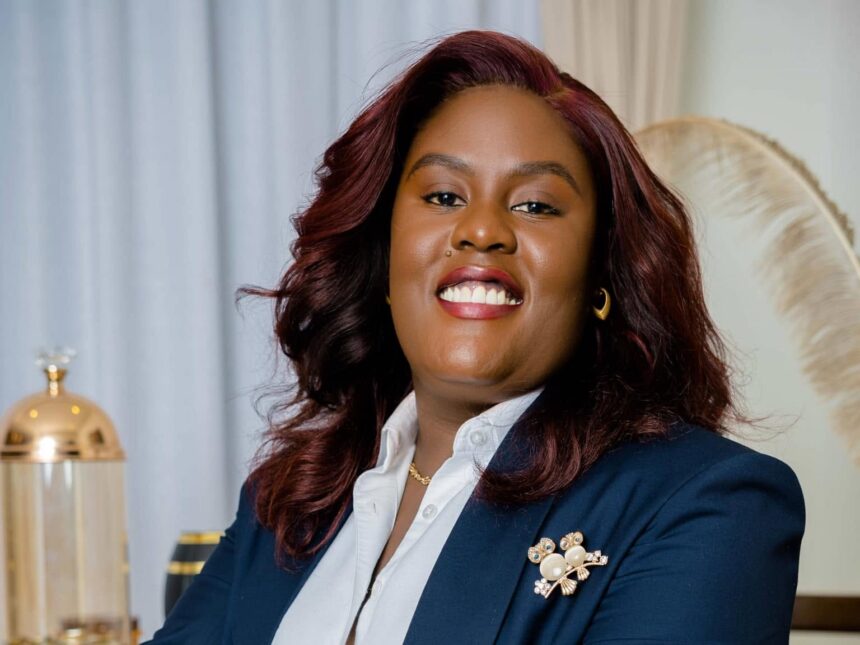
Winnie Odinga has offered a rare glimpse into her private life, opening up about her personality, views on marriage and the profound influence her late father, former Kenyan Prime Minister Raila Odinga, had on the choices she made throughout her life. Speaking during a candid podcast interview with journalist and YouTuber Edmund Obilo, Winnie discussed aspects of her life that she does not often address publicly. Her relaxed conversation provided a different perspective on the woman many Kenyans know primarily through her political family and public appearances. She spoke openly about being described as a tomboy while also revealing that she enjoys traditionally feminine interests, including reality television. The discussion eventually turned deeply personal when she explained why marriage has not yet become part of her life.
Winnie did not appear uncomfortable when Obilo raised questions about her tomboy identity, instead embracing the description while explaining that her interests cannot easily be placed into strict gender categories. She described herself as someone who enjoys what are often considered traditionally masculine interests, but made it clear that she also enjoys things commonly associated with women. Among her lighter interests, she mentioned watching reality television shows such as The Real Housewives of Lagos and The Real Housewives of Nairobi. Her comments highlighted a personality that does not fit neatly into the expectations people may have formed about her based on her public image. Rather than allowing labels to define her, Winnie suggested that curiosity, exposure and a willingness to learn have played a bigger role in shaping who she is.
The conversation also explored what it means to be a modern African woman, with Winnie offering a thoughtful response to the question of whether she considers herself traditional. She explained that there are aspects of her life and identity that remain deeply connected to African traditions, while other parts have been shaped by education and exposure to different cultures and ideas. Winnie argued that educating and exposing an African woman to the wider world does not necessarily mean that she loses her cultural identity. Instead, she suggested that greater exposure can give women the confidence to understand what they want and make independent decisions about their lives. She compared this process to Japan’s Meiji-era transformation, using the historical example to illustrate how societies can embrace change while retaining important elements of their identity.
Her comments about marriage provided some of the most revealing moments of the interview because Winnie made it clear that she has not rejected marriage as an institution. She said she believes in marriage and still holds a romantic view of finding a life partner. However, she explained that she simply has not met the person with whom she wants to settle down. Winnie also joked that she is currently married to her work, reflecting how much of her time and energy has been devoted to her professional responsibilities and other commitments. Her remarks offered an explanation that was more personal than sensational, suggesting that her unmarried status is not the result of a deliberate rejection of relationships. Instead, she appears to be waiting for a relationship that fits her expectations and personal values.
One of the most significant revelations came when Winnie reflected on her relationship with her late father and the responsibilities she carried while working closely with him. She explained that being Raila Odinga’s daughter was only one part of their relationship because she also served as his private secretary and confidante. That position placed her in an unusually close orbit around one of Kenya’s most influential political figures, requiring her to devote considerable attention to his needs and responsibilities. Winnie described her father’s influence using the image of the planet Jupiter, saying that being within his orbit could draw a person in completely. Her description showed how family loyalty and professional responsibility became closely connected throughout an important period of her life.
According to Winnie, that closeness came with personal sacrifices, particularly when it came to the things she might have wanted for herself. She acknowledged that taking care of her father meant putting some of her own desires aside, leaving her with the task of considering those choices now. Her comments suggest that her decision to remain unmarried cannot be understood simply by looking at her public career or personality. Much of her adult life involved responsibilities that came with being part of the family of a major political leader while also working directly alongside him. That experience appears to have shaped her priorities and the way she approaches major personal decisions. Her reflections also show that the process of figuring out what she wants for herself has continued as she moves into a different chapter of her life.
Winnie’s willingness to discuss these subjects has attracted attention because she has generally maintained a relatively private approach to her personal life. Much of the public discussion surrounding her has focused on her family, political connections and professional activities rather than her relationships or personal identity. The podcast gave listeners an opportunity to hear her speak in a more relaxed and reflective setting. Her comments about reality television and her tomboy identity brought a lighter side of her personality into the conversation, while her discussion of marriage revealed a more vulnerable side. Together, the different parts of the interview presented Winnie as someone who is comfortable acknowledging both the unconventional and traditional aspects of her identity.
Her story also highlights the complicated expectations that can accompany being the child of a prominent public figure. For Winnie, being Raila Odinga’s daughter came with access, responsibility and a close relationship with a father whose public life demanded significant attention. At the same time, those responsibilities appear to have affected the amount of space she had for her own personal ambitions and relationships. Her admission that she had to put some of her desires aside illustrates how family responsibilities can influence major life decisions, even for people who operate in the public eye. Rather than presenting her circumstances as a simple choice, Winnie offered a more nuanced explanation of how work, family and personal priorities can become intertwined.
The interview ultimately gave Winnie Odinga an opportunity to define herself beyond the assumptions that have followed her because of her family background and public image. She showed that being a tomboy does not prevent her from enjoying reality television or other interests that people may associate with femininity. She also made it clear that being a modern African woman does not require abandoning cultural roots or traditional values. On marriage, she presented herself as someone who still believes in love and partnership but has not yet found the person she wants to build that future with. Most importantly, her reflections on Raila Odinga showed that the responsibilities she carried as his daughter, private secretary and confidante played a major role in shaping the life she has lived so far.
Winnie’s candid conversation with Edmund Obilo has therefore offered the public a more personal understanding of a woman who has often remained guarded about her private world. Her comments suggest that her unmarried status is not something she views with regret or as a failure to meet social expectations. Instead, she appears to be taking time to reassess the parts of her life that were placed on hold while she supported her father and pursued her work. Her openness about her personality, relationships and family responsibilities has also challenged simplistic assumptions about who she is. As she continues to navigate life after the passing of Raila Odinga, her story reflects a personal journey shaped by family, duty, ambition and the freedom to decide what comes next.