

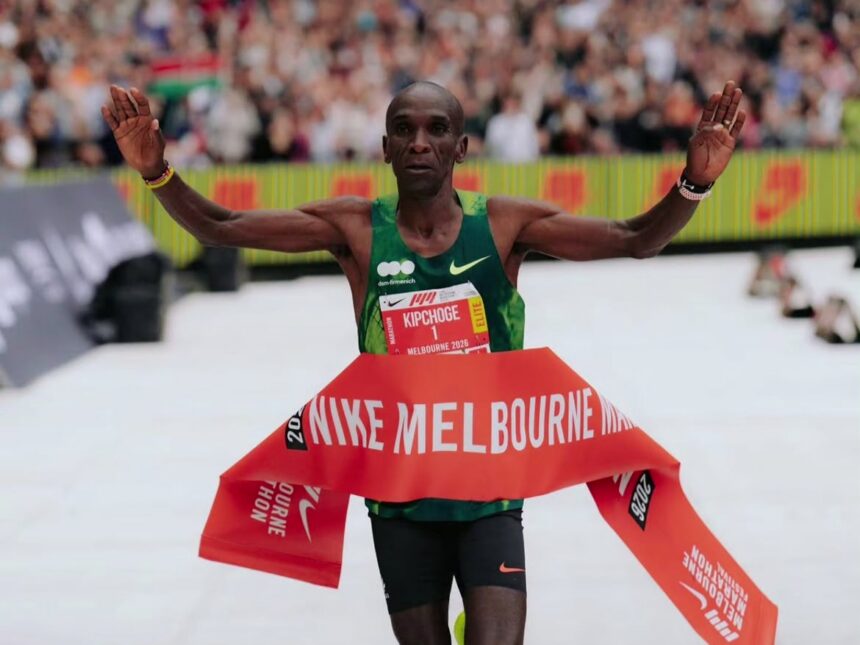
Eliud Kipchoge, one of the greatest marathon runners in history, has reportedly won the Melbourne Marathon in an impressive time of 2:09:10, setting a new record at the event. The Kenyan distance-running legend is known worldwide for his extraordinary endurance, disciplined training and remarkable achievements over the marathon distance. His reported performance in Melbourne has drawn attention to his continued influence on long-distance running and the growing popularity of marathon events around the world. A finishing time of 2 hours, 9 minutes and 10 seconds represents a strong performance over the demanding 42.195-kilometre distance. However, the event result and record claim require official confirmation before they can be treated as established facts.
Kipchoge has built an outstanding reputation through years of success at the highest level of international distance running. He won the Olympic marathon gold medal at the Rio 2016 Games and successfully defended his title at the Tokyo 2020 Olympics, which took place in 2021. These victories placed him among a select group of athletes who have won consecutive Olympic marathon titles. He has also achieved major success at prestigious road races, including the Berlin Marathon and the London Marathon. His consistency, race strategy and ability to maintain a demanding pace over long distances have made him a leading figure in modern athletics.
One of the most remarkable achievements of Kipchoge’s career came in October 2019, when he completed a marathon distance in 1:59:40 during the INEOS 1:59 Challenge in Vienna, Austria. The performance made him the first person to run the marathon distance in under two hours under specially arranged conditions. However, the attempt did not qualify as an official world record because it took place outside the standard competitive conditions required for record recognition. His official marathon world record was set in Berlin in September 2022, when he finished in 2:01:09. These achievements demonstrate the difference between an extraordinary athletic performance and a result that meets the formal requirements for official records.
If Kipchoge’s reported Melbourne Marathon finish of 2:09:10 is confirmed, the result would add another notable chapter to his long career. A marathon demands much more than speed, as runners must balance their energy levels, manage their pace and respond to changing conditions throughout the race. Weather, humidity, wind direction and the course layout can all affect finishing times. Even experienced elite runners must make careful decisions about when to maintain their pace and when to respond to competitors. A successful performance therefore reflects physical preparation, tactical awareness and the ability to remain focused under pressure.
The Melbourne Marathon is an established Australian road-running event that attracts elite athletes, recreational runners and participants from different parts of the world. Its appeal extends beyond competition, bringing together people who train for personal goals, charity fundraising and the challenge of completing a full marathon. Elite performances can raise the profile of the event and encourage greater interest in distance running. The participation of internationally recognised athletes can also inspire younger runners to pursue structured training and take a greater interest in athletics. For Melbourne, a high-profile marathon result can strengthen the event’s standing within Australia’s wider sporting calendar.
Kipchoge’s approach to marathon running offers valuable lessons for athletes at every level. His career has highlighted the importance of consistency, patience and preparation rather than relying on short bursts of exceptional effort. Marathon training typically involves progressively increasing running distance, developing aerobic fitness, practising race pace and allowing sufficient time for recovery. Nutrition and hydration also play important roles, particularly during long training sessions and competitive races. Although recreational runners cannot simply replicate the training of an Olympic champion, they can apply the same basic principles by setting realistic goals, following a suitable training plan and building fitness gradually.
The reported time of 2:09:10 also needs to be understood in the context of elite marathon competition. Although it would represent an impressive achievement for many runners, it is slower than Kipchoge’s personal best and official marathon world record of 2:01:09. Different courses and race conditions can produce different results, so finishing times should not be assessed without considering the circumstances of the event. A record claim must also identify which record has been broken, whether it concerns the overall course record, a category record or another recognised benchmark. Official race results are essential for confirming the winner, the finishing time and the exact nature of any record.
The wider significance of Kipchoge’s career goes beyond medals and finishing times. He has helped bring international attention to marathon running through his achievements, public appearances and message about the importance of discipline and sustained effort. His performances have encouraged discussions about the physical and mental demands of endurance sport. He has also demonstrated how experienced athletes can continue to compete at a high level while adapting to the changing demands of elite racing. His influence remains important to runners who view marathon participation as both a competitive pursuit and a personal challenge.
Eliud Kipchoge’s reported victory at the Melbourne Marathon in 2:09:10 would be a notable sporting story, particularly given his status as a two-time Olympic marathon champion and former world-record holder. His established career provides ample reason for continued interest in his performances and the standards he sets for endurance athletes. At the same time, accuracy matters when reporting major sporting achievements, especially when a result is described as a new record. Confirmation from the official race organisers would establish whether the reported finishing time and record claim are correct. Regardless of the final event details, Kipchoge’s achievements have already secured his place among the most influential marathon runners in the history of athletics.