

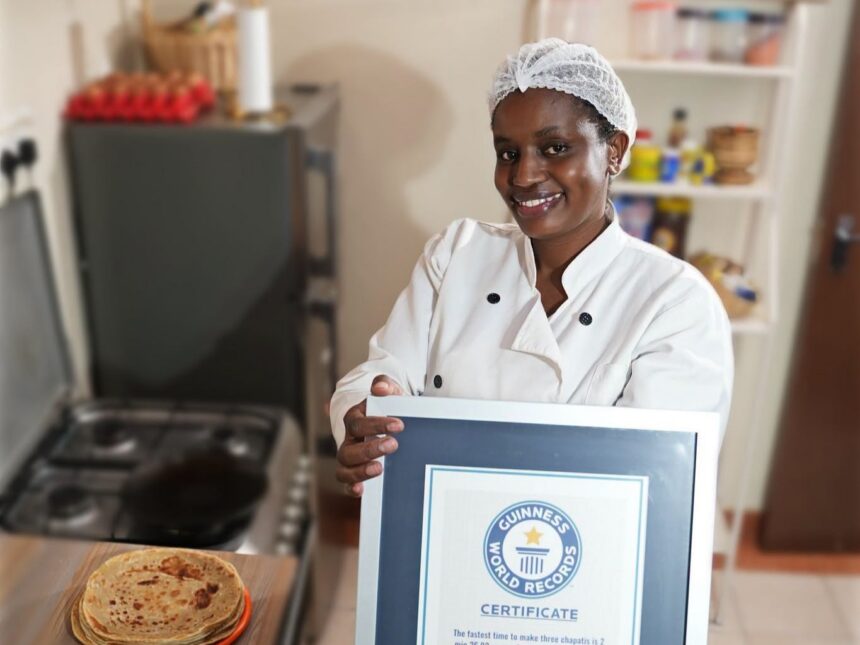
Kenyan chef Dorcas Kwamboka, popularly known as Doky Dorcas the Chapati Queen, has earned international recognition after Guinness World Records acknowledged her achievement for the fastest time to make three chapatis. Based in Ongata Rongai, on the outskirts of Nairobi, Kwamboka has turned her passion for cooking into a remarkable accomplishment that has attracted attention across Kenya. She reportedly beat the previous world record by an impressive 43 seconds, making her achievement a moment of celebration for Kenyan food lovers and supporters of local talent. The recognition highlights how a familiar dish in Kenyan homes can become the centre of an extraordinary international achievement. It has also sparked conversations about the importance of celebrating local heroes and providing talented individuals with opportunities to benefit from their success.
According to the Guinness World Records announcement shared on Facebook on Monday, October 12, 2026, Kwamboka had long been passionate about making chapatis and decided to test her skills by attempting the record. Her achievement followed years of developing her cooking abilities and refining a skill that requires preparation, coordination and consistency. Making chapatis involves more than simply preparing dough, as the process can include mixing ingredients, kneading, dividing the dough, rolling it into shape and cooking it properly. Completing the task within a record-setting time requires speed while maintaining control over the process. By surpassing the previous mark by 43 seconds, Kwamboka demonstrated the level of preparation and determination behind her attempt.
The achievement has brought renewed attention to chapati-making, a popular cooking tradition in Kenya and several other countries. Chapatis are commonly enjoyed with meals such as beans, green grams, beef stew and various vegetable dishes. For many Kenyan families, the flatbread is a familiar part of everyday meals, while preparing it from scratch is a skill developed through practice and experience. Kwamboka’s record has transformed this everyday culinary activity into a subject of international interest. Her recognition also shows how traditional food preparation can provide an opportunity for individuals to showcase their abilities on a global stage.
Following the announcement, Kwamboka took to Facebook to celebrate her achievement and reflect on what it meant to represent Kenya and her county internationally. In a humorous message, she explained that even though she was resting, her name had already travelled beyond national borders. She expressed pride in becoming a Guinness World Records holder and representing her community to a global audience. Her post also revealed a lighter side to the milestone, as she joked about the difference between international recognition and her personal financial situation. The message resonated with the wider conversation about how individuals can achieve extraordinary accomplishments without immediately receiving financial rewards.
Kwamboka’s comments about sponsorship quickly became one of the memorable aspects of her celebration. While she acknowledged the significance of putting Kenya on the global map, she joked that her bank statement had not experienced the same international success. She also highlighted the contrast between holding a globally recognised record and continuing to live as an ordinary citizen. Her humorous remarks reflected a practical concern shared by many independent creatives, entrepreneurs and talented individuals who gain public attention but still need financial support to grow their work. The achievement has therefore raised questions about how recognition can translate into meaningful opportunities for people who represent their communities through their skills.
The reaction to Kwamboka’s Guinness World Records recognition has also highlighted the pride many Kenyans feel when one of their own earns international attention. Social media users celebrated her accomplishment and praised her for showcasing a familiar part of Kenyan food culture to the world. Her story offers a reminder that notable achievements can emerge from everyday skills when individuals pursue them with commitment and a clear goal. It also challenges the idea that international recognition is limited to athletes, musicians, entertainers or people working in highly visible industries. Through her chapati-making skills, Kwamboka has given Kenyan cuisine another reason to attract attention beyond the country’s borders.
Despite the excitement surrounding the record, some Kenyans reportedly expressed concern that the government had yet to publicly acknowledge her achievement. Their reactions reflected a desire to see people who represent the country internationally receive greater recognition at home. Public acknowledgement can help bring attention to an individual’s work, while sponsorship and other forms of support may create opportunities to develop a personal brand or expand a business. However, formal recognition and financial assistance are separate matters, and neither should be assumed without an official announcement. Kwamboka’s own comments have made the question of sponsorship part of the public discussion surrounding her milestone.
For Kwamboka, the record could create opportunities to build on her identity as Doky Dorcas the Chapati Queen. International recognition may help attract new followers, increase interest in her cooking and open doors to partnerships or culinary projects. Potential opportunities could include food demonstrations, cooking events, brand collaborations or educational content focused on preparing chapatis, although no specific arrangements have been confirmed. Turning public attention into sustainable success would depend on the opportunities available to her and how she chooses to develop her work. Her call for sponsorship underlines the importance of creating practical pathways for talented people to benefit from their achievements.
The accomplishment also offers a wider lesson about the value of preserving and celebrating culinary traditions. Food connects communities through family experiences, cultural identity and shared meals, while cooking skills often pass from one generation to another. When a person uses those skills to achieve something exceptional, an everyday tradition can become a source of national pride. Kwamboka’s record has brought international attention to chapati-making and highlighted the dedication that can go into mastering a familiar recipe. Her story may also encourage other Kenyans to recognise the potential in their own talents, whether those skills involve cooking, crafts, performance or entrepreneurship.
Dorcas Kwamboka’s Guinness World Records recognition marks an important moment for the Kenyan chef and her growing public profile. By setting a new record for the fastest time to make three chapatis and beating the previous mark by 43 seconds, she has turned her passion for cooking into an internationally recognised achievement. Her celebration has brought together humour, national pride and a candid discussion about the need for sponsorship and practical support. Although questions remain about official acknowledgement and the financial opportunities that may follow, her accomplishment has already placed her name in the spotlight. As Doky Dorcas the Chapati Queen continues her journey, her story stands as a reminder that dedication to an everyday skill can lead to extraordinary recognition and give Kenyan talent another opportunity to shine on the world stage.